Skip to content
GenoLensGenoLens

TOP3A

Chr 17p11.2

DNA topoisomerase III alpha

Aliases:
ZGRF7
MANE:
ENST00000321105.10

Annotations refreshed 10 hours ago.

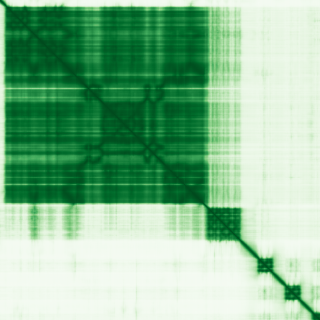
Predicted protein structure

Clinical relevance (Genomics England PanelApp)

Diagnostic Grade (Green)

  • Confirmed Fanconi anaemia or Bloom syndrome

    BIALLELIC, autosomal or pseudoautosomal
  • DDG2P

    BIALLELIC, autosomal or pseudoautosomal
  • Fetal anomalies

    BIALLELIC, autosomal or pseudoautosomal
  • Likely inborn error of metabolism

    BIALLELIC, autosomal or pseudoautosomal
  • Mitochondrial disorders

    BIALLELIC, autosomal or pseudoautosomal
  • Mitochondrial DNA maintenance disorder

    BIALLELIC, autosomal or pseudoautosomal
  • Monogenic short stature

    BIALLELIC, autosomal or pseudoautosomal
  • Possible mitochondrial disorder - nuclear genes

    BIALLELIC, autosomal or pseudoautosomal

+1 more panels — install the extension to see the full list inline on any page.

Disease associations (Open Targets)

  • microcephaly, growth restriction, and increased sister chromatid exchange 2

    0.72
  • progressive external ophthalmoplegia with mitochondrial DNA deletions, autosomal recessive 5

    0.65
  • cancer

    0.55
  • hereditary disease

    0.47
  • mitochondrial disease

    0.42
  • autosomal recessive progressive external ophthalmoplegia

    0.37
  • multiple sclerosis

    0.14
  • Sensorineural hearing impairment

    0.12
  • osteosarcoma

    0.05
  • inborn mitochondrial metabolism disorder

    0.04

Score is the Open Targets composite evidence score (0-1). Higher = stronger gene-disease association.

Protein function (UniProt)

DNA topoisomerase 3-alpha

Releases the supercoiling and torsional tension of DNA introduced during the DNA replication and transcription by transiently cleaving and rejoining one strand of the DNA duplex. Introduces a single-strand break via transesterification at a target site in duplex DNA. The scissile phosphodiester is attacked by the catalytic tyrosine of the enzyme, resulting in the formation of a DNA-(5'-phosphotyrosyl)-enzyme intermediate and the expulsion of a 3'-OH DNA strand. The free DNA strand then undergoes passage around the unbroken strand thus removing DNA supercoils. Finally, in the religation step, the DNA 3'-OH attacks the covalent intermediate to expel the active-site tyrosine and restore the DNA phosphodiester backbone. As an essential component of the RMI complex it is involved in chromosome separation and the processing of homologous recombination intermediates to limit DNA crossover formation in cells. Has DNA decatenation activity (PubMed:30057030). It is required for mtDNA decatenation and segregation after completion of replication, in a process that does not require BLM, RMI1 and RMI2 (PubMed:29290614)

Data sources: HGNC (CC BY 4.0), AlphaFold (CC BY 4.0, Jumper et al. Nature 2021), Genomics England PanelApp (CC BY 4.0), ClinGen, Open Targets (CC0), UniProt.

Not for sole clinical decision-making. Always verify against primary sources.