Skip to content
GenoLensGenoLens

TOR1A

Chr 9q34.11

torsin family 1 member A

Aliases:
DQ2
MANE:
ENST00000351698.5

Annotations refreshed 1 month ago.

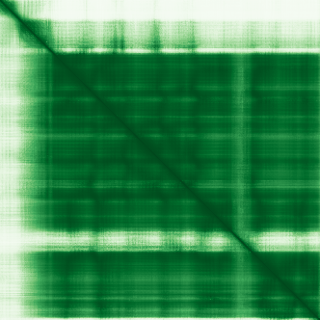
Predicted protein structure

Clinical relevance (Genomics England PanelApp)

Diagnostic Grade (Green)

  • Adult onset dystonia, chorea or related movement disorder

    MONOALLELIC, autosomal or pseudoautosomal, NOT imprinted
  • Arthrogryposis

    BOTH monoallelic and biallelic (but BIALLELIC mutations cause a more SEVERE disease form), autosomal or pseudoautosomal
  • Childhood onset dystonia, chorea or related movement disorder

    BOTH monoallelic and biallelic, autosomal or pseudoautosomal
  • DDG2P

    BIALLELIC, autosomal or pseudoautosomal
  • Early onset dystonia

    BOTH monoallelic and biallelic (but BIALLELIC mutations cause a more SEVERE disease form), autosomal or pseudoautosomal
  • Fetal anomalies

    BIALLELIC, autosomal or pseudoautosomal
  • Intellectual disability

    BIALLELIC, autosomal or pseudoautosomal
  • Structural basal ganglia disorders

    MONOALLELIC, autosomal or pseudoautosomal, NOT imprinted

+2 more panels — install the extension to see the full list inline on any page.

Disease associations (Open Targets)

  • arthrogryposis multiplex congenita 5

    0.77
  • early-onset generalized limb-onset dystonia

    0.72
  • dystonic disorder

    0.62
  • Primary dystonia, DYT4 type

    0.60
  • Dystonia

    0.52
  • hereditary disease

    0.45
  • prostate carcinoma

    0.39
  • arthrogryposis multiplex congenita

    0.37
  • nervous system disorder

    0.28
  • herpes zoster

    0.27

Score is the Open Targets composite evidence score (0-1). Higher = stronger gene-disease association.

Protein function (UniProt)

Torsin-1A

Protein with chaperone functions important for the control of protein folding, processing, stability and localization as well as for the reduction of misfolded protein aggregates. Involved in the regulation of synaptic vesicle recycling, controls STON2 protein stability in collaboration with the COP9 signalosome complex (CSN). In the nucleus, may link the cytoskeleton with the nuclear envelope, this mechanism seems to be crucial for the control of nuclear polarity, cell movement and, specifically in neurons, nuclear envelope integrity. Participates in the cellular trafficking and may regulate the subcellular location of multipass membrane proteins such as the dopamine transporter SLC6A3, leading to the modulation of dopamine neurotransmission. In the endoplasmic reticulum, plays a role in the quality control of protein folding by increasing clearance of misfolded proteins such as SGCE variants or holding them in an intermediate state for proper refolding. May have a redundant function with TOR1B in non-neural tissues

Data sources: HGNC (CC BY 4.0), AlphaFold (CC BY 4.0, Jumper et al. Nature 2021), Genomics England PanelApp (CC BY 4.0), ClinGen, Open Targets (CC0), UniProt.

Not for sole clinical decision-making. Always verify against primary sources.