
AlphaFold predicted structure
TPP1 · O14773
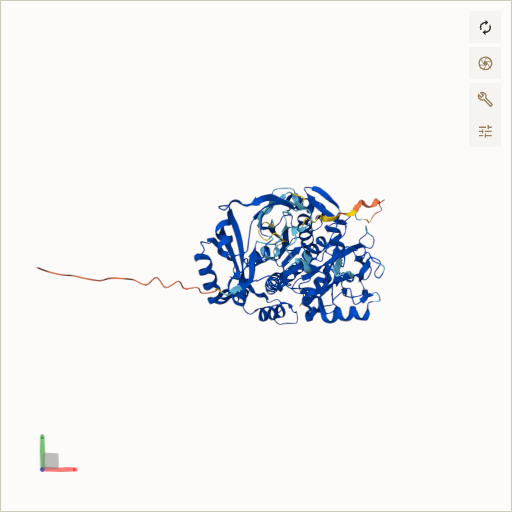
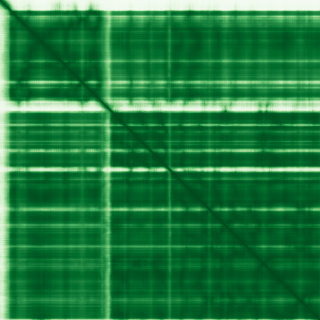
Mean pLDDT
90.5/ 100
Very high
563 residues
Confidence breakdown
- Very high(≥ 90)80%
- Confident(70–90)12%
- Low(50–70)3%
- Very low(< 50)5%
Open interactive 3D viewer
AlphaFold (Jumper et al., 2021) · CC BY 4.0
tripeptidyl peptidase 1
Annotations refreshed 2 months ago.
Diagnostic Grade (Green)
Ataxia and cerebellar anomalies - narrow panel
BIALLELIC, autosomal or pseudoautosomalDDG2P
BIALLELIC, autosomal or pseudoautosomalEarly onset or syndromic epilepsy
BIALLELIC, autosomal or pseudoautosomalHereditary ataxia
BIALLELIC, autosomal or pseudoautosomalHereditary ataxia with onset in adulthood
BIALLELIC, autosomal or pseudoautosomalIntellectual disability
BIALLELIC, autosomal or pseudoautosomalLikely inborn error of metabolism
BIALLELIC, autosomal or pseudoautosomalLysosomal storage disorder
BIALLELIC, autosomal or pseudoautosomal+10 more panels — install the extension to see the full list inline on any page.
neuronal ceroid lipofuscinosis 2
CLN2 disease
Childhood-onset autosomal recessive slowly progressive spinocerebellar ataxia
autosomal recessive spinocerebellar ataxia 7
neuronal ceroid lipofuscinosis
juvenile neuronal ceroid lipofuscinosis
late infantile neuronal ceroid lipofuscinosis
hereditary disease
infantile neuronal ceroid lipofuscinosis
Intellectual disability
Score is the Open Targets composite evidence score (0-1). Higher = stronger gene-disease association.
Tripeptidyl-peptidase 1
Lysosomal serine protease with tripeptidyl-peptidase I activity (PubMed:11054422, PubMed:19038966, PubMed:19038967). May act as a non-specific lysosomal peptidase which generates tripeptides from the breakdown products produced by lysosomal proteinases (PubMed:11054422, PubMed:19038966, PubMed:19038967). Requires substrates with an unsubstituted N-terminus (PubMed:19038966)
TPP1 · O14773
Mean pLDDT
90.5/ 100
Very high
563 residues
Confidence breakdown
AlphaFold (Jumper et al., 2021) · CC BY 4.0