
AlphaFold predicted structure
TRAC · P01848
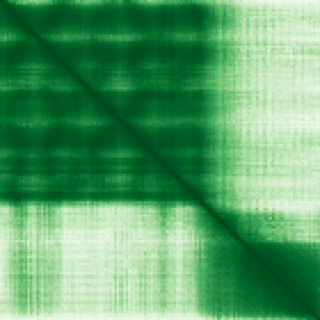
Mean pLDDT
92.0/ 100
Very high
140 residues
Confidence breakdown
- Very high(≥ 90)78%
- Confident(70–90)20%
- Low(50–70)2%
- Very low(< 50)0%
Open interactive 3D viewer
AlphaFold (Jumper et al., 2021) · CC BY 4.0
T cell receptor alpha constant
Annotations refreshed 2 months ago.
Diagnostic Grade (Green)
COVID-19 research
BIALLELIC, autosomal or pseudoautosomalPrimary immunodeficiency or monogenic inflammatory bowel disease
BIALLELIC, autosomal or pseudoautosomalTCR-alpha-beta-positive T-cell deficiency
combined immunodeficiency
severe combined immunodeficiency
otitis media with effusion
bacterial infectious disease with sepsis
neoplasm
Acute hepatic failure
Tetralogy of Fallot
ulcerative colitis
IgA glomerulonephritis
Score is the Open Targets composite evidence score (0-1). Higher = stronger gene-disease association.
T cell receptor alpha chain constant
Constant region of T cell receptor (TR) alpha chain (PubMed:24600447). Alpha-beta T cell receptors are antigen specific receptors which are essential to the immune response and are present on the cell surface of T lymphocytes. Recognize peptide-major histocompatibility (MH) (pMH) complexes that are displayed by antigen presenting cells (APC), a prerequisite for efficient T cell adaptive immunity against pathogens (PubMed:25493333). Binding of alpha-beta TR to pMH complex initiates TR-CD3 clustering on the cell surface and intracellular activation of LCK that phosphorylates the ITAM motifs of CD3G, CD3D, CD3E and CD247 enabling the recruitment of ZAP70. In turn, ZAP70 phosphorylates LAT, which recruits numerous signaling molecules to form the LAT signalosome. The LAT signalosome propagates signal branching to three major signaling pathways, the calcium, the mitogen-activated protein kinase (MAPK) kinase and the nuclear factor NF-kappa-B (NF-kB) pathways, leading to the mobilization of transcription factors that are critical for gene expression and essential for T cell growth and differentiation (PubMed:23524462). The T cell repertoire is generated in the thymus, by V-(D)-J rearrangement. This repertoire is then shaped by intrathymic selection events to generate a peripheral T cell pool of self-MH restricted, non-autoaggressive T cells. Post-thymic interaction of alpha-beta TR with the pMH complexes shapes TR structural and functional avidity (PubMed:15040585)
TRAC · P01848
Mean pLDDT
92.0/ 100
Very high
140 residues
Confidence breakdown
AlphaFold (Jumper et al., 2021) · CC BY 4.0