
AlphaFold predicted structure
TRAF3 · Q13114
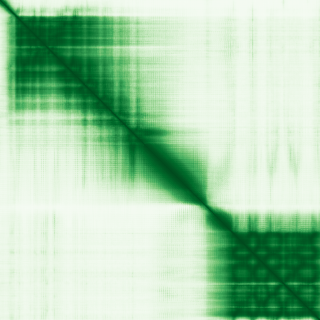
Mean pLDDT
87.9/ 100
Confident
568 residues
Confidence breakdown
- Very high(≥ 90)71%
- Confident(70–90)21%
- Low(50–70)3%
- Very low(< 50)6%
Open interactive 3D viewer
AlphaFold (Jumper et al., 2021) · CC BY 4.0
TNF receptor associated factor 3
Annotations refreshed 2 months ago.
Diagnostic Grade (Green)
COVID-19 research
MONOALLELIC, autosomal or pseudoautosomal, imprinted status unknownPrimary immunodeficiency or monogenic inflammatory bowel disease
MONOALLELIC, autosomal or pseudoautosomal, NOT imprintedHerpetic encephalitis
Eczematoid dermatitis
asthma
allergic rhinitis
immunodeficiency 132b
atopic eczema
type 2 diabetes mellitus
Abnormality of the skeletal system
multiple sclerosis
TRAF3 haploinsufficiency
Score is the Open Targets composite evidence score (0-1). Higher = stronger gene-disease association.
TNF receptor-associated factor 3
Cytoplasmic E3 ubiquitin ligase that regulates various signaling pathways, such as the NF-kappa-B, mitogen-activated protein kinase (MAPK) and interferon regulatory factor (IRF) pathways, and thus controls a lot of biological processes in both immune and non-immune cell types (PubMed:33148796, PubMed:33608556). In TLR and RLR signaling pathways, acts as an E3 ubiquitin ligase promoting the synthesis of 'Lys-63'-linked polyubiquitin chains on several substrates such as ASC that lead to the activation of the type I interferon response or the inflammasome (PubMed:25847972, PubMed:27980081). Following the activation of certain TLRs such as TLR4, acts as a negative NF-kappa-B regulator, possibly to avoid unregulated inflammatory response, and its degradation via 'Lys-48'-linked polyubiquitination is required for MAPK activation and production of inflammatory cytokines. Alternatively, when TLR4 orchestrates bacterial expulsion, TRAF3 undergoes 'Lys-33'-linked polyubiquitination and subsequently binds to RALGDS, mobilizing the exocyst complex to rapidly expel intracellular bacteria back for clearance (PubMed:27438768). Also acts as a constitutive negative regulator of the alternative NF-kappa-B pathway, which controls B-cell survival and lymphoid organ development. Required for normal antibody isotype switching from IgM to IgG. Plays a role T-cell dependent immune responses. Down-regulates proteolytic processing of NFKB2, and thereby inhibits non-canonical activation of NF-kappa-B. Promotes ubiquitination and proteasomal degradation of MAP3K14
TRAF3 · Q13114
Mean pLDDT
87.9/ 100
Confident
568 residues
Confidence breakdown
AlphaFold (Jumper et al., 2021) · CC BY 4.0