Skip to content
GenoLensGenoLens

TRAPPC9

Chr 8q24.3

trafficking protein particle complex subunit 9

Aliases:
IKBKBBP, NIBP, KIAA1882, T1, TRS120
MANE:
ENST00000438773.4

Annotations refreshed 1 month ago.

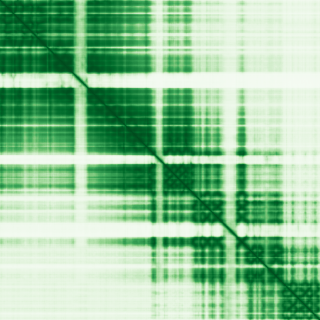
Predicted protein structure

Clinical relevance (Genomics England PanelApp)

Diagnostic Grade (Green)

  • Clefting

    BIALLELIC, autosomal or pseudoautosomal
  • DDG2P

    BIALLELIC, autosomal or pseudoautosomal
  • Fetal anomalies

    BIALLELIC, autosomal or pseudoautosomal
  • Intellectual disability

    BIALLELIC, autosomal or pseudoautosomal
  • Severe microcephaly

    BIALLELIC, autosomal or pseudoautosomal

Disease associations (Open Targets)

  • intellectual disability, autosomal recessive 13

    0.77
  • autosomal recessive non-syndromic intellectual disability

    0.63
  • intellectual disability-obesity-brain malformations-facial dysmorphism syndrome

    0.53
  • hereditary disease

    0.52
  • Abnormality of the nervous system

    0.45
  • autism spectrum disorder

    0.41
  • Intellectual disability

    0.41
  • Intellectual disability - obesity - brain malformations - facial dysmorphism

    0.37
  • cervical carcinoma

    0.35
  • pyelonephritis

    0.31

Score is the Open Targets composite evidence score (0-1). Higher = stronger gene-disease association.

Protein function (UniProt)

Trafficking protein particle complex subunit 9

Functions as an activator of NF-kappa-B through increased phosphorylation of the IKK complex. May function in neuronal cells differentiation. May play a role in vesicular transport from endoplasmic reticulum to Golgi

Curated MONDO disease pages that list TRAPPC9 among their top associated genes.

Data sources: HGNC (CC BY 4.0), AlphaFold (CC BY 4.0, Jumper et al. Nature 2021), Genomics England PanelApp (CC BY 4.0), ClinGen, Open Targets (CC0), UniProt.

Not for sole clinical decision-making. Always verify against primary sources.