
AlphaFold predicted structure
TRIM28 · Q13263
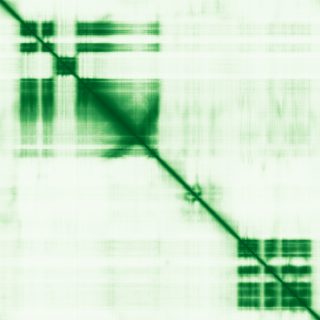
Mean pLDDT
65.1/ 100
Low
835 residues
Confidence breakdown
- Very high(≥ 90)24%
- Confident(70–90)28%
- Low(50–70)10%
- Very low(< 50)39%
Open interactive 3D viewer
AlphaFold (Jumper et al., 2021) · CC BY 4.0
tripartite motif containing 28
Annotations refreshed 2 months ago.
Diagnostic Grade (Green)
Childhood solid tumours
MONOALLELIC, autosomal or pseudoautosomal, NOT imprintedEmbryonal tumour of possible germline origin
MONOALLELIC, autosomal or pseudoautosomal, NOT imprintedWilms tumor 7
neurodegenerative disease
Wilms tumor
Nephroblastoma
viral infectious disease
autoimmune disorder of central nervous system
childhood kidney Wilms tumor
Wilms tumor 1
Familial prostate cancer
prostate cancer
Score is the Open Targets composite evidence score (0-1). Higher = stronger gene-disease association.
Transcription intermediary factor 1-beta
E3 SUMO and ubiquitin ligase that plays a pivotal role in embryonic development, genomic imprinting, and maintenance of genomic stability through repression of repetitive and retroviral elements. Also involved in DNA repair, regulation of innate immunity or cellular energy homeostasis. Acts as a scaffold for assembling transcriptional repression complexes containing methyltransferases, histone deacetylases, and chromatin remodelers. Serves as a nuclear corepressor for KRAB domain-containing zinc finger proteins (KRAB-ZFPs), mediating gene silencing by recruiting CHD3, a subunit of the nucleosome remodeling and deacetylation (NuRD) complex, and SETDB1, which methylates histone H3 at Lys-9 (H3K9me), leading to heterochromatin formation. In collaboration with SETDB1, is also required for H3K9me3 and silencing of endogenous and introduced retroviruses in a DNA-methylation independent-pathway (By similarity). Functions as a coactivator for CEBPB and NR3C1 (glucocorticoid receptor) in transcriptional activation of ORM1, and as a corepressor for ERBB4. Inhibits E2F1 activity by promoting E2F1-HDAC1 complex formation and preventing E2F1 acetylation. This contributes to CDKN1A/p21(CIP1) regulation and provides a partial backup to suppress E2F1-mediated apoptosis in the absence of RB1. Mediates the nuclear localization of several KRAB-ZFP transcription factors including KOX1, ZNF268, and ZNF300 among others. In association with isoform 2 of ZFP90, is required for the transcriptional repressor activity of FOXP3 and the suppressive function of regulatory T-cells (Treg)(PubMed:23543754). Required to maintain a transcriptionally repressive state of genes in undifferentiated embryonic stem cells (ESCs) (PubMed:24623306). Acts as a corepressor for ZFP568. Beyond its nuclear functions, acts as a positive regulator of type I interferon (IFN-I) signaling by promoting Lys-63-linked ubiquitination of TBK1, facilitating TBK1-IRF3 complex formation (PubMed:38495890). Mediates TRAF6 SUMOylation to regulate its nucleo-cytoplasmic shuttling and modulate activation of the canonical NF-kappa-B signaling pathway (PubMed:39920527). Facilitates SUMOylation of NLRP3, protecting it from 'Lys-48'-linked ubiquitination and proteasomal degradation and thereby enhancing inflammasome activation (PubMed:34373456)
TRIM28 · Q13263
Mean pLDDT
65.1/ 100
Low
835 residues
Confidence breakdown
AlphaFold (Jumper et al., 2021) · CC BY 4.0