AlphaFold predicted structure
TRIM71 · Q2Q1W2
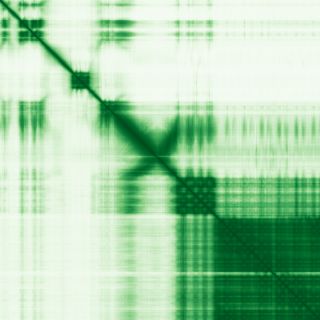
Mean pLDDT
79.1/ 100
Confident
868 residues
Confidence breakdown
- Very high(≥ 90)44%
- Confident(70–90)33%
- Low(50–70)4%
- Very low(< 50)18%
AlphaFold (Jumper et al., 2021) · CC BY 4.0
tripartite motif containing 71
Annotations refreshed 9 hours ago.
Diagnostic Grade (Green)
DDG2P
MONOALLELIC, autosomal or pseudoautosomal, imprinted status unknownFetal anomalies
MONOALLELIC, autosomal or pseudoautosomal, NOT imprintedHydrocephalus
MONOALLELIC, autosomal or pseudoautosomal, NOT imprintedhydrocephalus, congenital communicating, 1
open-angle glaucoma
glaucoma
congenital communicating hydrocephalus
congenital hydrocephalus
benign neoplasm
femoral neck fracture
placental retention
atopic eczema
ovarian neoplasm
Score is the Open Targets composite evidence score (0-1). Higher = stronger gene-disease association.
E3 ubiquitin-protein ligase TRIM71
E3 ubiquitin-protein ligase that cooperates with the microRNAs (miRNAs) machinery and promotes embryonic stem cells proliferation and maintenance (Probable). Binds to miRNAs and associates with AGO2, participating in post-transcriptional repression of transcripts such as CDKN1A (By similarity). In addition, participates in post-transcriptional mRNA repression in a miRNA independent mechanism (PubMed:23125361). Facilitates the G1-S transition to promote rapid embryonic stem cell self-renewal by repressing CDKN1A expression. Required to maintain proliferation and prevent premature differentiation of neural progenitor cells during early neural development: positively regulates FGF signaling by controlling the stability of SHCBP1 (By similarity). Specific regulator of miRNA biogenesis. Binds to miRNA MIR29A hairpin and postranscriptionally modulates MIR29A levels, which indirectly regulates TET proteins expression (PubMed:28431233)
TRIM71 · Q2Q1W2

Mean pLDDT
79.1/ 100
Confident
868 residues
Confidence breakdown
AlphaFold (Jumper et al., 2021) · CC BY 4.0