
AlphaFold predicted structure
TRIP11 · Q15643
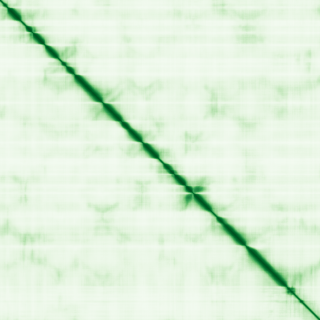
Mean pLDDT
66.0/ 100
Low
1,979 residues
Confidence breakdown
- Very high(≥ 90)0%
- Confident(70–90)61%
- Low(50–70)17%
- Very low(< 50)22%
Open interactive 3D viewer
AlphaFold (Jumper et al., 2021) · CC BY 4.0
thyroid hormone receptor interactor 11
Annotations refreshed 2 months ago.
Diagnostic Grade (Green)
DDG2P
BIALLELIC, autosomal or pseudoautosomalFetal anomalies
BIALLELIC, autosomal or pseudoautosomalSkeletal dysplasia
BIALLELIC, autosomal or pseudoautosomalIntellectual disability
BIALLELIC, autosomal or pseudoautosomalOsteogenesis imperfecta
Achondrogenesis type 1A
odontochondrodysplasia 1
achondrogenesis type IA
cancer
achondrogenesis
connective tissue disorder
TRIP11-related skeletal dysplasia
hereditary disease
odontochondrodysplasia
neurodegenerative disease
Score is the Open Targets composite evidence score (0-1). Higher = stronger gene-disease association.
Thyroid receptor-interacting protein 11
Is a membrane tether required for vesicle tethering to Golgi. Has an essential role in the maintenance of Golgi structure and function (PubMed:25473115, PubMed:30728324). It is required for efficient anterograde and retrograde trafficking in the early secretory pathway, functioning at both the ER-to-Golgi intermediate compartment (ERGIC) and Golgi complex (PubMed:25717001). Binds the ligand binding domain of the thyroid receptor (THRB) in the presence of triiodothyronine and enhances THRB-modulated transcription
Curated MONDO disease pages that list TRIP11 among their top associated genes.
TRIP11 · Q15643
Mean pLDDT
66.0/ 100
Low
1,979 residues
Confidence breakdown
AlphaFold (Jumper et al., 2021) · CC BY 4.0