AlphaFold predicted structure
TRIT1 · Q9H3H1
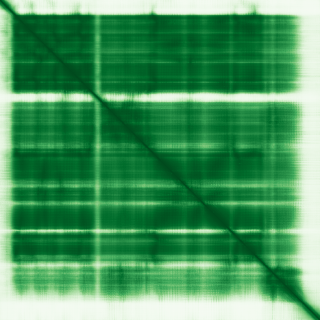
Mean pLDDT
84.6/ 100
Confident
467 residues
Confidence breakdown
- Very high(≥ 90)61%
- Confident(70–90)22%
- Low(50–70)6%
- Very low(< 50)11%
AlphaFold (Jumper et al., 2021) · CC BY 4.0
tRNA isopentenyltransferase 1
Annotations refreshed 10 hours ago.
Diagnostic Grade (Green)
Early onset or syndromic epilepsy
BIALLELIC, autosomal or pseudoautosomalFetal anomalies
BIALLELIC, autosomal or pseudoautosomalIntellectual disability
BIALLELIC, autosomal or pseudoautosomalLikely inborn error of metabolism
BIALLELIC, autosomal or pseudoautosomalMitochondrial disorders
BIALLELIC, autosomal or pseudoautosomalPossible mitochondrial disorder - nuclear genes
BIALLELIC, autosomal or pseudoautosomalDDG2P
BIALLELIC, autosomal or pseudoautosomalcombined oxidative phosphorylation deficiency 35
neurodegenerative disease
hereditary disease
mitochondrial disease
inborn mitochondrial metabolism disorder
Macrocephaly
Epileptic encephalopathy
breast cancer
breast neoplasm
small cell lung carcinoma
Score is the Open Targets composite evidence score (0-1). Higher = stronger gene-disease association.
tRNA dimethylallyltransferase
Catalyzes the transfer of a dimethylallyl group onto the adenine at position 37 of both cytosolic and mitochondrial tRNAs, leading to the formation of N6-(dimethylallyl)adenosine (i6A37) (PubMed:11111046, PubMed:24126054, PubMed:24901367, PubMed:34774131). Mediates modification of a limited subset of tRNAs: tRNA(Ser)(AGA), tRNA(Ser)(CGA), tRNA(Ser)(UGA), as well as partial modification of the selenocysteine tRNA(Ser)(UCA) (PubMed:24126054). TRIT1 is therefore required for selenoprotein expression (PubMed:24126054)
TRIT1 · Q9H3H1

Mean pLDDT
84.6/ 100
Confident
467 residues
Confidence breakdown
AlphaFold (Jumper et al., 2021) · CC BY 4.0