
AlphaFold predicted structure
TRNT1 · Q96Q11
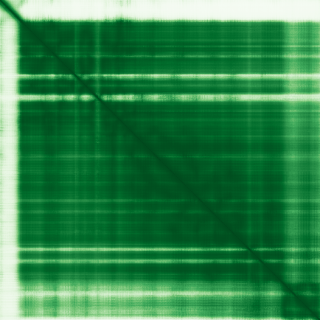
Mean pLDDT
90.3/ 100
Very high
434 residues
Confidence breakdown
- Very high(≥ 90)84%
- Confident(70–90)7%
- Low(50–70)4%
- Very low(< 50)6%
Open interactive 3D viewer
AlphaFold (Jumper et al., 2021) · CC BY 4.0
tRNA nucleotidyl transferase 1
Annotations refreshed 3 months ago.
Diagnostic Grade (Green)
COVID-19 research
BIALLELIC, autosomal or pseudoautosomalDDG2P
BIALLELIC, autosomal or pseudoautosomalIntellectual disability
BIALLELIC, autosomal or pseudoautosomalLikely inborn error of metabolism
BIALLELIC, autosomal or pseudoautosomalMitochondrial disorders
BIALLELIC, autosomal or pseudoautosomalPossible mitochondrial disorder - nuclear genes
BIALLELIC, autosomal or pseudoautosomalPrimary immunodeficiency or monogenic inflammatory bowel disease
BIALLELIC, autosomal or pseudoautosomalRare anaemia
BIALLELIC, autosomal or pseudoautosomal+5 more panels — install the extension to see the full list inline on any page.
congenital sideroblastic anemia-B-cell immunodeficiency-periodic fever-developmental delay syndrome
retinitis pigmentosa and erythrocytic microcytosis
Retinal dystrophy
hereditary disease
autosomal recessive non-syndromic intellectual disability
sideroblastic anemia
arthropathy
neurodegenerative disease
aneurysm
genetic developmental and epileptic encephalopathy
Score is the Open Targets composite evidence score (0-1). Higher = stronger gene-disease association.
CCA tRNA nucleotidyltransferase 1, mitochondrial
Nucleotidyltransferase that catalyzes the addition and repair of the essential 3'-terminal CCA sequence in tRNAs, which is necessary for the attachment of amino acids to the 3' terminus of tRNA molecules, using CTP and ATP as substrates (PubMed:11504732, PubMed:25193871, PubMed:25640237, PubMed:25652405, PubMed:29454993, PubMed:30959222, PubMed:31011209, PubMed:34023389). tRNA 3'-terminal CCA addition is required both for tRNA processing and repair (PubMed:22076379, PubMed:25640237). Promotes tRNA repair and recycling downstream of the ribosome-associated quality control (RQC) pathway by mediating addition of the tRNA 3'-terminal CCA following cleavage by ANKZF1 and repair by ELAC1 (PubMed:31011209). Also involved in tRNA surveillance by mediating tandem CCA addition to generate a CCACCA at the 3' terminus of unstable tRNAs and tRNA-like transcripts (PubMed:22076379, PubMed:25640237). While stable tRNAs receive only 3'-terminal CCA, unstable tRNAs beginning with GG are marked with CCACCA and rapidly degraded (PubMed:22076379, PubMed:25640237). The structural flexibility of RNA controls the choice between CCA versus CCACCA addition: following the first CCA addition cycle, nucleotide-binding to the active site triggers a clockwise screw motion, producing torque on the RNA (PubMed:25640237). This ejects stable RNAs, whereas unstable RNAs are refolded while bound to the enzyme and subjected to a second CCA catalytic cycle (PubMed:25640237)
TRNT1 · Q96Q11
Mean pLDDT
90.3/ 100
Very high
434 residues
Confidence breakdown
AlphaFold (Jumper et al., 2021) · CC BY 4.0