
AlphaFold predicted structure
TRPM1 · Q7Z4N2
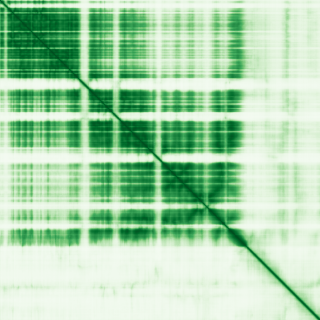
Mean pLDDT
66.3/ 100
Low
1,603 residues
Confidence breakdown
- Very high(≥ 90)17%
- Confident(70–90)41%
- Low(50–70)8%
- Very low(< 50)33%
Open interactive 3D viewer
AlphaFold (Jumper et al., 2021) · CC BY 4.0
transient receptor potential cation channel subfamily M member 1
Annotations refreshed 3 months ago.
Diagnostic Grade (Green)
DDG2P
BIALLELIC, autosomal or pseudoautosomalRetinal disorders
BIALLELIC, autosomal or pseudoautosomalFetal anomalies
BIALLELIC, autosomal or pseudoautosomalGlaucoma (developmental)
Intellectual disability
BIALLELIC, autosomal or pseudoautosomalStructural eye disease
BIALLELIC, autosomal or pseudoautosomalcongenital stationary night blindness
Retinal dystrophy
hereditary disease
retinal disorder
alcohol drinking
Hypocalcemia
actinic keratosis
sunburn
macular degeneration
exocrine pancreatic carcinoma
Score is the Open Targets composite evidence score (0-1). Higher = stronger gene-disease association.
Transient receptor potential cation channel subfamily M member 1
Constitutively open nonselective divalent cation-conducting channels which mediate the influx of Ca(2+), Mg(2+), Mn(2+), Ba(2+), and Ni(2+) into the cytoplasm, leading to membrane depolarization (PubMed:11535825, PubMed:19436059, PubMed:21278253). Impermeable to zinc ions (PubMed:21278253). In addition, forms heteromultimeric ion channels with TRPM3 which are permeable for calcium and zinc ions (PubMed:21278253). Plays an essential role for the depolarizing photoresponse of retinal ON bipolar cells (PubMed:19878917, PubMed:19896109). In the dark, tonic release of glutamate activates the G protein-coupled receptor for glutamate, GRM6, its activation induces the release of G(o) protein and the beta-gamma G protein dimer. Both subunits can interact and inactivate the TRPM1 channel. A light onset, induces decrease in glutamate release and deactivation of GRM6 leading to channel opening and membrane depolarization (By similarity). May play a role in metastasis suppression (PubMed:9537257)
Curated MONDO disease pages that list TRPM1 among their top associated genes.
TRPM1 · Q7Z4N2
Mean pLDDT
66.3/ 100
Low
1,603 residues
Confidence breakdown
AlphaFold (Jumper et al., 2021) · CC BY 4.0