
AlphaFold predicted structure
TRPM3 · Q9HCF6
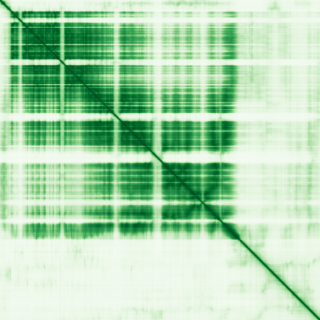
Mean pLDDT
64.3/ 100
Low
1,732 residues
Confidence breakdown
- Very high(≥ 90)15%
- Confident(70–90)41%
- Low(50–70)7%
- Very low(< 50)37%
Open interactive 3D viewer
AlphaFold (Jumper et al., 2021) · CC BY 4.0
transient receptor potential cation channel subfamily M member 3
Annotations refreshed 2 months ago.
Diagnostic Grade (Green)
DDG2P
MONOALLELIC, autosomal or pseudoautosomal, imprinted status unknownEarly onset or syndromic epilepsy
MONOALLELIC, autosomal or pseudoautosomal, imprinted status unknownIntellectual disability
MONOALLELIC, autosomal or pseudoautosomal, imprinted status unknownneurodevelopmental disorder with hypotonia, dysmorphic facies, and skeletal anomalies, with or without seizures
cataract 50 with or without glaucoma
autosomal dominant non-syndromic intellectual disability
restless legs syndrome
hereditary disease
Abnormality of the skeletal system
Intellectual disability
syndromic complex neurodevelopmental disorder
Global developmental delay
Seizure
Score is the Open Targets composite evidence score (0-1). Higher = stronger gene-disease association.
Transient receptor potential cation channel subfamily M member 3
Constitutively active, non-selective divalent cation-conducting channel that is permeable to Ca(2+), Mn(2+), and Mg(2+), with a high permeability for Ca(2+). However, can be enhanced by increasing temperature and by ligands, including the endogenous neurosteroid pregnenolone sulfate and sphingosine-1 and suppressed by intracellular Mg(2+) (PubMed:12672799, PubMed:12672827, PubMed:32343227). Implicated in a variety of cellular processes, including insulin/peptide secretion, vascular constriction and dilation, noxious heat sensing, inflammatory and spontaneous pain sensitivity. In neurons of the dorsal root ganglia, functions as thermosensitive channel for the detection of noxious heat and spontaneous pain. Suggested to function as an ionotropic steroid receptor in beta-cell, indeed pregnenolone sulfate leads to Ca(2+) influx and enhanced insulin secretion. Mediates Zn(2+) uptake into the lumen of pancreatic beta cell secretory granules, thereby regulating insulin secretion (By similarity). Forms heteromultimeric ion channels with TRPM1 which are permeable for Ca(2+) and Zn(2+) ions (PubMed:21278253). Exists as multiple splice variants which differ significantly in their biophysical properties (By similarity)
TRPM3 · Q9HCF6
Mean pLDDT
64.3/ 100
Low
1,732 residues
Confidence breakdown
AlphaFold (Jumper et al., 2021) · CC BY 4.0