AlphaFold predicted structure
TRPM4 · Q8TD43
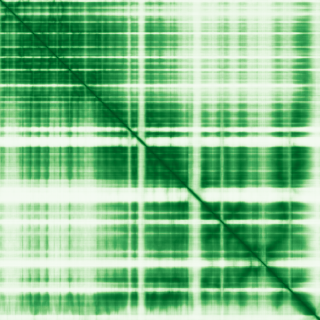
Mean pLDDT
77.4/ 100
Confident
1,214 residues
Confidence breakdown
- Very high(≥ 90)27%
- Confident(70–90)51%
- Low(50–70)10%
- Very low(< 50)12%
AlphaFold (Jumper et al., 2021) · CC BY 4.0
transient receptor potential cation channel subfamily M member 4
Annotations refreshed 1 month ago.
Moderate Evidence (Amber)
Progressive cardiac conduction disease
MONOALLELIC, autosomal or pseudoautosomal, NOT imprintedBrugada syndrome and cardiac sodium channel disease
MONOALLELIC, autosomal or pseudoautosomal, NOT imprintedFetal anomalies
MONOALLELIC, autosomal or pseudoautosomal, NOT imprintedShort QT syndrome
MONOALLELIC, autosomal or pseudoautosomal, imprinted status unknownFamilial progressive cardiac conduction defect
erythrokeratodermia variabilis
Abnormality of the cardiovascular system
Brugada syndrome
Prolonged QT interval
hypertrophic cardiomyopathy
cardiomyopathy
progressive familial heart block, type 1A
sudden cardiac arrest
hereditary disease
Score is the Open Targets composite evidence score (0-1). Higher = stronger gene-disease association.
Transient receptor potential cation channel subfamily M member 4
Calcium-activated selective cation channel that mediates membrane depolarization (PubMed:12015988, PubMed:12842017, PubMed:29211723, PubMed:30528822). While it is activated by increase in intracellular Ca(2+), it is impermeable to it (PubMed:12015988). Mediates transport of monovalent cations (Na(+) > K(+) > Cs(+) > Li(+)), leading to depolarize the membrane (PubMed:12015988). It thereby plays a central role in cadiomyocytes, neurons from entorhinal cortex, dorsal root and vomeronasal neurons, endocrine pancreas cells, kidney epithelial cells, cochlea hair cells etc. Participates in T-cell activation by modulating Ca(2+) oscillations after T lymphocyte activation, which is required for NFAT-dependent IL2 production. Involved in myogenic constriction of cerebral arteries. Controls insulin secretion in pancreatic beta-cells. May also be involved in pacemaking or could cause irregular electrical activity under conditions of Ca(2+) overload. Affects T-helper 1 (Th1) and T-helper 2 (Th2) cell motility and cytokine production through differential regulation of calcium signaling and NFATC1 localization. Enhances cell proliferation through up-regulation of the beta-catenin signaling pathway. Plays a role in keratinocyte differentiation (PubMed:30528822)
TRPM4 · Q8TD43

Mean pLDDT
77.4/ 100
Confident
1,214 residues
Confidence breakdown
AlphaFold (Jumper et al., 2021) · CC BY 4.0