
AlphaFold predicted structure
TRPM6 · Q9BX84
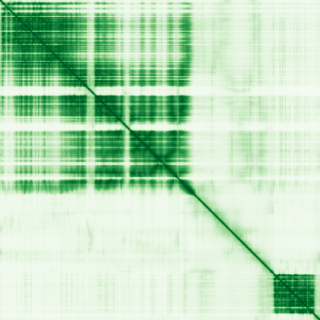
Mean pLDDT
64.6/ 100
Low
2,022 residues
Confidence breakdown
- Very high(≥ 90)12%
- Confident(70–90)45%
- Low(50–70)9%
- Very low(< 50)34%
Open interactive 3D viewer
AlphaFold (Jumper et al., 2021) · CC BY 4.0
transient receptor potential cation channel subfamily M member 6
Annotations refreshed 2 months ago.
Diagnostic Grade (Green)
Early onset or syndromic epilepsy
BIALLELIC, autosomal or pseudoautosomalLikely inborn error of metabolism
BIALLELIC, autosomal or pseudoautosomalRenal tubulopathies
BIALLELIC, autosomal or pseudoautosomalUndiagnosed metabolic disorders
BIALLELIC, autosomal or pseudoautosomalChildhood onset dystonia, chorea or related movement disorder
Nephrocalcinosis or nephrolithiasis
BIALLELIC, autosomal or pseudoautosomalintestinal hypomagnesemia 1
Primary hypomagnesemia with secondary hypocalcemia
hereditary disease
nephrolithiasis
bladder calculus
cervical carcinoma
alcohol drinking
Hypomagnesemia
neurodegenerative disease
vascular dementia
Score is the Open Targets composite evidence score (0-1). Higher = stronger gene-disease association.
Transient receptor potential cation channel subfamily M member 6
Bifunctional protein that combines an ion channel with an intrinsic kinase domain, enabling it to modulate cellular functions either by conducting ions through the pore or by phosphorylating downstream proteins via its kinase domain (PubMed:14576148, PubMed:16636202, PubMed:18258429, PubMed:18365021). Crucial for Mg(2+) homeostasis. Has an important role in epithelial Mg(2+) transport and in the active Mg(2+) absorption in the gut and kidney (PubMed:14576148). However, whether TRPM6 forms functional homomeric channels by itself or functions primarily as a subunit of heteromeric TRPM6-TRPM7 channels, is still under debate (PubMed:14576148, PubMed:16636202, PubMed:24385424)
TRPM6 · Q9BX84
Mean pLDDT
64.6/ 100
Low
2,022 residues
Confidence breakdown
AlphaFold (Jumper et al., 2021) · CC BY 4.0