
AlphaFold predicted structure
TRPM7 · Q96QT4
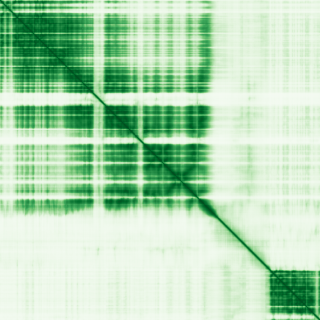
Mean pLDDT
69.5/ 100
Low
1,865 residues
Confidence breakdown
- Very high(≥ 90)19%
- Confident(70–90)45%
- Low(50–70)11%
- Very low(< 50)26%
Open interactive 3D viewer
AlphaFold (Jumper et al., 2021) · CC BY 4.0
transient receptor potential cation channel subfamily M member 7
Annotations refreshed 2 months ago.
Diagnostic Grade (Green)
Early onset or syndromic epilepsy
MONOALLELIC, autosomal or pseudoautosomal, imprinted status unknownLikely inborn error of metabolism
MONOALLELIC, autosomal or pseudoautosomal, imprinted status unknownBleeding and platelet disorders
MONOALLELIC, autosomal or pseudoautosomal, imprinted status unknownFetal anomalies
MONOALLELIC, autosomal or pseudoautosomal, NOT imprintedamyotrophic lateral sclerosis-parkinsonism-dementia complex
intestinal hypomagnesemia 1
autosomal dominant macrothrombocytopenia
autoimmune disorder of central nervous system
Macrothrombocytopenia
macrothrombocytopenia, isolated
juvenile amyotrophic lateral sclerosis
ischemic stroke
central nervous system cancer
glioma
Score is the Open Targets composite evidence score (0-1). Higher = stronger gene-disease association.
Transient receptor potential cation channel subfamily M member 7
Bifunctional protein that combines an ion channel with an intrinsic kinase domain, enabling it to modulate cellular functions either by conducting ions through the pore or by phosphorylating downstream proteins via its kinase domain. The channel is highly permeable to divalent cations, specifically calcium (Ca2+), magnesium (Mg2+) and zinc (Zn2+) and mediates their influx (PubMed:11385574, PubMed:12887921, PubMed:15485879, PubMed:24316671, PubMed:35561741, PubMed:36027648). Controls a wide range of biological processes such as Ca2(+), Mg(2+) and Zn(2+) homeostasis, vesicular Zn(2+) release channel and intracellular Ca(2+) signaling, embryonic development, immune responses, cell motility, proliferation and differentiation (By similarity). The C-terminal alpha-kinase domain autophosphorylates cytoplasmic residues of TRPM7 (PubMed:18365021). In vivo, TRPM7 phosphorylates SMAD2, suggesting that TRPM7 kinase may play a role in activating SMAD signaling pathways. In vitro, TRPM7 kinase phosphorylates ANXA1 (annexin A1), myosin II isoforms and a variety of proteins with diverse cellular functions (PubMed:15485879, PubMed:18394644)
TRPM7 · Q96QT4
Mean pLDDT
69.5/ 100
Low
1,865 residues
Confidence breakdown
AlphaFold (Jumper et al., 2021) · CC BY 4.0