Skip to content
GenoLensGenoLens

TTC21B

Chr 2q24.3

tetratricopeptide repeat domain 21B

Aliases:
FLJ11457, JBTS11, NPHP12, IFT139B, THM1
MANE:
ENST00000243344.8

Annotations refreshed 1 month ago.

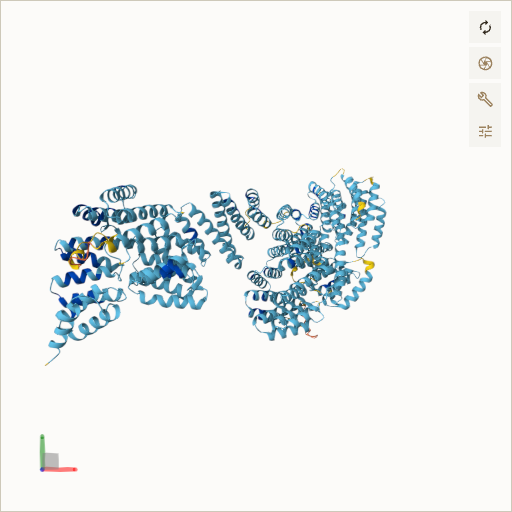
Predicted protein structure

Clinical relevance (Genomics England PanelApp)

Diagnostic Grade (Green)

  • Cystic kidney disease

    BIALLELIC, autosomal or pseudoautosomal
  • Extreme early-onset hypertension

    BIALLELIC, autosomal or pseudoautosomal
  • Fetal anomalies

    BIALLELIC, autosomal or pseudoautosomal
  • Rare multisystem ciliopathy disorders

    BIALLELIC, autosomal or pseudoautosomal
  • Renal ciliopathies

    BIALLELIC, autosomal or pseudoautosomal
  • Retinal disorders

    BIALLELIC, autosomal or pseudoautosomal
  • Skeletal ciliopathies

    BIALLELIC, autosomal or pseudoautosomal
  • Skeletal dysplasia

    BIALLELIC, autosomal or pseudoautosomal

+11 more panels — install the extension to see the full list inline on any page.

Disease associations (Open Targets)

  • nephronophthisis

    0.83
  • Jeune syndrome

    0.75
  • Infantile nephronophthisis

    0.52
  • Retinal dystrophy

    0.50
  • short-rib thoracic dysplasia 6 with or without polydactyly

    0.45
  • alcohol drinking

    0.43
  • Beemer-Langer syndrome

    0.42
  • nephrotic syndrome

    0.42
  • hereditary disease

    0.42
  • Senior-Loken syndrome

    0.41

Score is the Open Targets composite evidence score (0-1). Higher = stronger gene-disease association.

Protein function (UniProt)

Tetratricopeptide repeat protein 21B

Component of the IFT complex A (IFT-A), a complex required for retrograde ciliary transport and entry into cilia of G protein-coupled receptors (GPCRs). Essential for retrograde trafficking of IFT-1, IFT-B and GPCRs (PubMed:27932497). Negatively modulates the SHH signal transduction (By similarity)

Curated MONDO disease pages that list TTC21B among their top associated genes.

Data sources: HGNC (CC BY 4.0), AlphaFold (CC BY 4.0, Jumper et al. Nature 2021), Genomics England PanelApp (CC BY 4.0), ClinGen, Open Targets (CC0), UniProt.

Not for sole clinical decision-making. Always verify against primary sources.