
AlphaFold predicted structure
TUBB1 · Q9H4B7
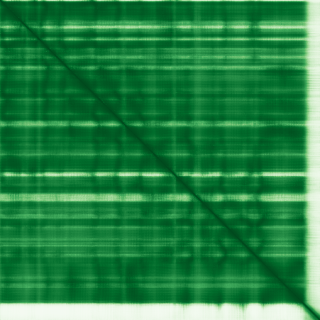
Mean pLDDT
90.9/ 100
Very high
451 residues
Confidence breakdown
- Very high(≥ 90)80%
- Confident(70–90)14%
- Low(50–70)2%
- Very low(< 50)4%
Open interactive 3D viewer
AlphaFold (Jumper et al., 2021) · CC BY 4.0
tubulin beta 1 class VI
Annotations refreshed 2 months ago.
Diagnostic Grade (Green)
Bleeding and platelet disorders
MONOALLELIC, autosomal or pseudoautosomal, imprinted status unknownInherited bleeding disorders
MONOALLELIC, autosomal or pseudoautosomal, imprinted status unknownCongenital hypothyroidism
BOTH monoallelic and biallelic, autosomal or pseudoautosomalCytopenia - NOT Fanconi anaemia
MONOALLELIC, autosomal or pseudoautosomal, NOT imprintedCytopenias and congenital anaemias
MONOALLELIC, autosomal or pseudoautosomal, NOT imprintedautosomal dominant macrothrombocytopenia
breast cancer
non-small cell lung carcinoma
hemorrhagic disease
breast carcinoma
prostate cancer
neoplasm
breast neoplasm
Hodgkins lymphoma
gout
Score is the Open Targets composite evidence score (0-1). Higher = stronger gene-disease association.
Tubulin beta-1 chain
Tubulin is the major constituent of microtubules, a cylinder consisting of laterally associated linear protofilaments composed of alpha- and beta-tubulin heterodimers. Microtubules grow by the addition of GTP-tubulin dimers to the microtubule end, where a stabilizing cap forms. Below the cap, tubulin dimers are in GDP-bound state, owing to GTPase activity of alpha-tubulin
Curated MONDO disease pages that list TUBB1 among their top associated genes.
TUBB1 · Q9H4B7
Mean pLDDT
90.9/ 100
Very high
451 residues
Confidence breakdown
AlphaFold (Jumper et al., 2021) · CC BY 4.0