
AlphaFold predicted structure
TULP1 · O00294
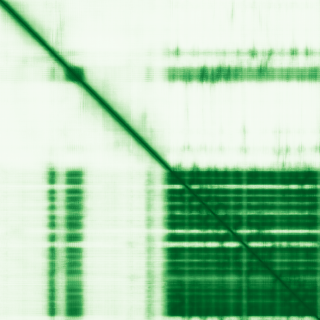
Mean pLDDT
65.4/ 100
Low
542 residues
Confidence breakdown
- Very high(≥ 90)31%
- Confident(70–90)16%
- Low(50–70)9%
- Very low(< 50)44%
Open interactive 3D viewer
AlphaFold (Jumper et al., 2021) · CC BY 4.0
TUB like protein 1
Annotations refreshed 2 months ago.
Diagnostic Grade (Green)
Retinal disorders
BIALLELIC, autosomal or pseudoautosomalAlbinism or congenital nystagmus
BIALLELIC, autosomal or pseudoautosomalGlaucoma (developmental)
Ophthalmological ciliopathies
Primary ciliary disorders
Rare multisystem ciliopathy disorders
Skeletal dysplasia
Structural eye disease
BIALLELIC, autosomal or pseudoautosomal+1 more panels — install the extension to see the full list inline on any page.
retinitis pigmentosa
Leber congenital amaurosis
Retinal dystrophy
Leber congenital amaurosis 1
autosomal recessive retinitis pigmentosa
Posterior column ataxia - retinitis pigmentosa
eye disorder
Stargardt disease
retinal degeneration
polydactyly, postaxial, type A1
Score is the Open Targets composite evidence score (0-1). Higher = stronger gene-disease association.
Tubby-related protein 1
Required for normal development of photoreceptor synapses. Required for normal photoreceptor function and for long-term survival of photoreceptor cells. Interacts with cytoskeleton proteins and may play a role in protein transport in photoreceptor cells (By similarity). Binds lipids, especially phosphatidylinositol 3-phosphate, phosphatidylinositol 4-phosphate, phosphatidylinositol 5-phosphate, phosphatidylinositol 3,4-bisphosphate, phosphatidylinositol 4,5-bisphosphate, phosphatidylinositol 3,4,5-bisphosphate, phosphatidylserine and phosphatidic acid (in vitro). Contribute to stimulation of phagocytosis of apoptotic retinal pigment epithelium (RPE) cells and macrophages
Curated MONDO disease pages that list TULP1 among their top associated genes.
TULP1 · O00294
Mean pLDDT
65.4/ 100
Low
542 residues
Confidence breakdown
AlphaFold (Jumper et al., 2021) · CC BY 4.0