AlphaFold predicted structure
TULP3 · O75386
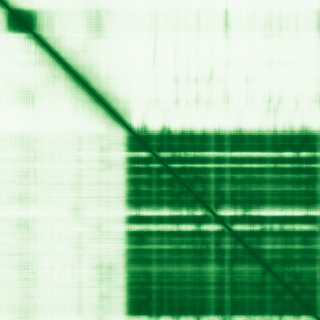
Mean pLDDT
72.3/ 100
Confident
442 residues
Confidence breakdown
- Very high(≥ 90)42%
- Confident(70–90)17%
- Low(50–70)9%
- Very low(< 50)32%
AlphaFold (Jumper et al., 2021) · CC BY 4.0
TUB like protein 3
Annotations refreshed 9 hours ago.
Diagnostic Grade (Green)
Cystic kidney disease
BIALLELIC, autosomal or pseudoautosomalDuctal plate malformation
BIALLELIC, autosomal or pseudoautosomalHypertrophic cardiomyopathy
BIALLELIC, autosomal or pseudoautosomalFetal anomalies
BIALLELIC, autosomal or pseudoautosomalhepatorenocardiac degenerative fibrosis
neurodegenerative disease
ciliopathy
poisoning
hereditary disease
renal cysts and diabetes syndrome
polycystic liver disease 3 with or without kidney cysts
polycystic liver disease 4 with or without kidney cysts
nephronophthisis
Meckel syndrome
Score is the Open Targets composite evidence score (0-1). Higher = stronger gene-disease association.
Tubby-related protein 3
Protein-protein adapter that drives transport of G protein-coupled receptors into primary cilia by mediating association between the intraflagellar transport complex A (IFT-A) and G protein-coupled receptors FFAR4, GPR45 and GPR161 (PubMed:11375483, PubMed:20889716, PubMed:31761534, PubMed:36775821). Acts as a negative regulator of the Shh signaling by promoting trafficking of GPR161 to cilia (PubMed:20889716, PubMed:36775821). During adipogenesis, regulates ciliary trafficking of FFAR4 in preadipocytes (PubMed:31761534). Promotes transport of GPR45 into primary cilia of neurons in paraventricular nucleus (PVN) of the hypothalamus (By similarity). Binds to phosphorylated inositide (phosphoinositide) lipids; both IFT-A- and phosphoinositide-binding properties are required to regulate ciliary G protein-coupled receptor trafficking (PubMed:11375483, PubMed:20889716). Besides its role in cilium localization, acts as a regulator of AMP-activated protein kinase (AMPK) activity in response to calorie restriction: binds lithocholic acid, a metabolite generated in response to calorie restriction, promoting TULP3 ability to activate SIRT1, which then deacetylates the ATP6V1E1 subunit of the V-ATPase complex, leading to (1) V-ATPase complex inhibition on lysosomes and (2) AMPK activation via the AXIN1-STK11/LKB1 axis (By similarity)
TULP3 · O75386

Mean pLDDT
72.3/ 100
Confident
442 residues
Confidence breakdown
AlphaFold (Jumper et al., 2021) · CC BY 4.0