
AlphaFold predicted structure
TUSC3 · Q13454
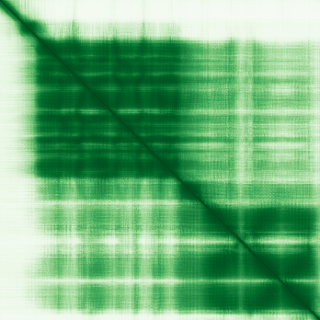
Mean pLDDT
84.8/ 100
Confident
348 residues
Confidence breakdown
- Very high(≥ 90)56%
- Confident(70–90)31%
- Low(50–70)6%
- Very low(< 50)7%
Open interactive 3D viewer
AlphaFold (Jumper et al., 2021) · CC BY 4.0
tumor suppressor candidate 3
Annotations refreshed 2 months ago.
Diagnostic Grade (Green)
Congenital disorders of glycosylation
BIALLELIC, autosomal or pseudoautosomalDDG2P
BIALLELIC, autosomal or pseudoautosomalIntellectual disability
BIALLELIC, autosomal or pseudoautosomalLikely inborn error of metabolism
BIALLELIC, autosomal or pseudoautosomalUndiagnosed metabolic disorders
BIALLELIC, autosomal or pseudoautosomalChildhood onset dystonia, chorea or related movement disorder
Fetal anomalies
BIALLELIC, autosomal or pseudoautosomalautosomal recessive non-syndromic intellectual disability
dengue disease
Intellectual disability
hereditary disease
Abnormality of the skeletal system
COVID-19
conduction system disorder
intelligence
ovarian neoplasm
placenta praevia
Score is the Open Targets composite evidence score (0-1). Higher = stronger gene-disease association.
Dolichyl-diphosphooligosaccharide--protein glycosyltransferase subunit TUSC3
Acts as accessory component of the N-oligosaccharyl transferase (OST) complex which catalyzes the transfer of a high mannose oligosaccharide from a lipid-linked oligosaccharide donor to an asparagine residue within an Asn-X-Ser/Thr consensus motif in nascent polypeptide chains. Involved in N-glycosylation of STT3B-dependent substrates. Specifically required for the glycosylation of a subset of acceptor sites that are near cysteine residues; in this function seems to act redundantly with MAGT1. In its oxidized form proposed to form transient mixed disulfides with a glycoprotein substrate to facilitate access of STT3B to the unmodified acceptor site. Also has oxidoreductase-independent functions in the STT3B-containing OST complex possibly involving substrate recognition. Could indirectly play a role in Mg(2+) transport (PubMed:19717468)
Curated MONDO disease pages that list TUSC3 among their top associated genes.
TUSC3 · Q13454
Mean pLDDT
84.8/ 100
Confident
348 residues
Confidence breakdown
AlphaFold (Jumper et al., 2021) · CC BY 4.0