
AlphaFold predicted structure
TWIST1 · Q15672
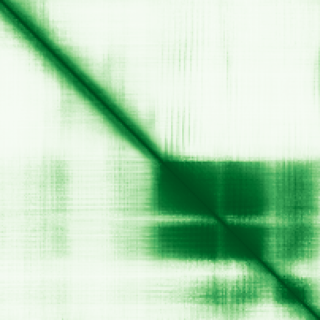
Mean pLDDT
66.3/ 100
Low
202 residues
Confidence breakdown
- Very high(≥ 90)20%
- Confident(70–90)16%
- Low(50–70)42%
- Very low(< 50)22%
Open interactive 3D viewer
AlphaFold (Jumper et al., 2021) · CC BY 4.0
twist family bHLH transcription factor 1
Annotations refreshed 2 months ago.
Diagnostic Grade (Green)
Common craniosynostosis syndromes
MONOALLELIC, autosomal or pseudoautosomal, imprinted status unknownDDG2P
MONOALLELIC, autosomal or pseudoautosomal, imprinted status unknownFetal anomalies
MONOALLELIC, autosomal or pseudoautosomal, imprinted status unknownHydrocephalus
MONOALLELIC, autosomal or pseudoautosomal, imprinted status unknownIntellectual disability
MONOALLELIC, autosomal or pseudoautosomal, NOT imprintedLimb disorders
MONOALLELIC, autosomal or pseudoautosomal, imprinted status unknownRare syndromic craniosynostosis or isolated multisuture synostosis
MONOALLELIC, autosomal or pseudoautosomal, NOT imprintedSkeletal dysplasia
MONOALLELIC, autosomal or pseudoautosomal, NOT imprintedSaethre-Chotzen syndrome
TWIST1-related craniosynostosis
Robinow-Sorauf syndrome
syndromic craniosynostosis
neurodegenerative disease
Sweeney-Cox syndrome
androgenetic alopecia
hereditary disease
atrial fibrillation
isolated scaphocephaly
Score is the Open Targets composite evidence score (0-1). Higher = stronger gene-disease association.
Twist-related protein 1
Acts as a transcriptional regulator. Inhibits myogenesis by sequestrating E proteins, inhibiting trans-activation by MEF2, and inhibiting DNA-binding by MYOD1 through physical interaction. This interaction probably involves the basic domains of both proteins. Also represses expression of pro-inflammatory cytokines such as TNFA and IL1B. Regulates cranial suture patterning and fusion. Activates transcription as a heterodimer with E proteins. Regulates gene expression differentially, depending on dimer composition. Homodimers induce expression of FGFR2 and POSTN while heterodimers repress FGFR2 and POSTN expression and induce THBS1 expression. Heterodimerization is also required for osteoblast differentiation. Represses the activity of the circadian transcriptional activator: NPAS2-BMAL1 heterodimer (By similarity)
Curated MONDO disease pages that list TWIST1 among their top associated genes.
TWIST1 · Q15672
Mean pLDDT
66.3/ 100
Low
202 residues
Confidence breakdown
AlphaFold (Jumper et al., 2021) · CC BY 4.0