
AlphaFold predicted structure
TWNK · Q96RR1
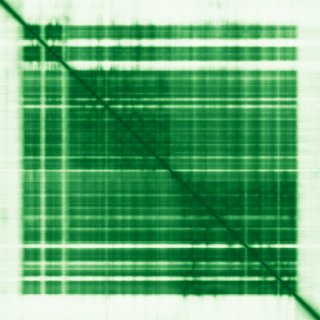
Mean pLDDT
78.3/ 100
Confident
684 residues
Confidence breakdown
- Very high(≥ 90)48%
- Confident(70–90)29%
- Low(50–70)4%
- Very low(< 50)19%
Open interactive 3D viewer
AlphaFold (Jumper et al., 2021) · CC BY 4.0
twinkle mtDNA helicase
Annotations refreshed 2 months ago.
Diagnostic Grade (Green)
Ataxia and cerebellar anomalies - narrow panel
BOTH monoallelic and biallelic, autosomal or pseudoautosomalHereditary ataxia
BOTH monoallelic and biallelic, autosomal or pseudoautosomalHereditary ataxia with onset in adulthood
BOTH monoallelic and biallelic, autosomal or pseudoautosomalHereditary neuropathy or pain disorder
BOTH monoallelic and biallelic, autosomal or pseudoautosomalInherited white matter disorders
BOTH monoallelic and biallelic, autosomal or pseudoautosomalLikely inborn error of metabolism
BOTH monoallelic and biallelic, autosomal or pseudoautosomalMitochondrial disorders
BOTH monoallelic and biallelic, autosomal or pseudoautosomalMitochondrial DNA maintenance disorder
BOTH monoallelic and biallelic (but BIALLELIC mutations cause a more SEVERE disease form), autosomal or pseudoautosomal+10 more panels — install the extension to see the full list inline on any page.
progressive external ophthalmoplegia with mitochondrial DNA deletions, autosomal dominant 3
mitochondrial DNA depletion syndrome 7 (hepatocerebral type)
Perrault syndrome 5
Perrault syndrome
mitochondrial disease
mitochondrial DNA depletion syndrome
autosomal dominant progressive external ophthalmoplegia
Perrault syndrome 2
progressive external ophthalmoplegia with mitochondrial DNA deletions
Perrault syndrome 1
Score is the Open Targets composite evidence score (0-1). Higher = stronger gene-disease association.
Twinkle mtDNA helicase
Mitochondrial helicase involved in mtDNA replication and repair (PubMed:12975372, PubMed:15167897, PubMed:17324440, PubMed:18039713, PubMed:18971204, PubMed:25824949, PubMed:26887820, PubMed:27226550). Might have a role in mtDNA repair (PubMed:27226550). Has DNA strand separation activity needed to form a processive replication fork for leading strand synthesis which is catalyzed by the formation of a replisome complex with POLG and mtSDB (PubMed:12975372, PubMed:15167897, PubMed:18039713, PubMed:22383523, PubMed:26887820, PubMed:27226550). Preferentially unwinds DNA substrates with pre-existing 5'-and 3'- single-stranded tails but is also active on a 5'- flap substrate (PubMed:12975372, PubMed:15167897, PubMed:18039713, PubMed:22383523, PubMed:26887820, PubMed:27226550). Can dissociate the invading strand of immobile or mobile D-loop DNA structures irrespective of the single strand polarity of the third strand (PubMed:27226550). In addition to its DNA strand separation activity, also has DNA strand annealing, DNA strand-exchange and DNA branch migration activities (PubMed:22383523, PubMed:26887820, PubMed:27226550)
TWNK · Q96RR1
Mean pLDDT
78.3/ 100
Confident
684 residues
Confidence breakdown
AlphaFold (Jumper et al., 2021) · CC BY 4.0