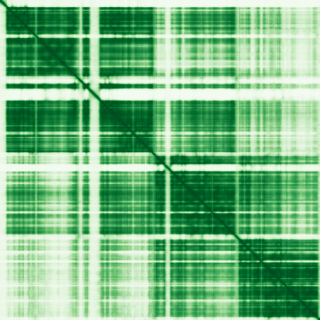
Non-receptor tyrosine-protein kinase TYK2
Non-membrane spanning protein tyrosine kinase involved in numerous cytokines and interferons signaling, which regulates cell growth, development, cell migration, innate and adaptive immunity (PubMed:10542297, PubMed:10995743, PubMed:7657660, PubMed:7813427, PubMed:8232552). Plays both structural and catalytic roles in numerous interleukins and interferons (IFN-alpha/beta) signaling (PubMed:10542297). Associates with heterodimeric cytokine receptor complexes and activates STAT family members including STAT1, STAT3, STAT4 or STAT6 (PubMed:10542297, PubMed:7638186). The heterodimeric cytokine receptor complexes are composed of (1) a TYK2-associated receptor chain (IFNAR1, IL12RB1, IL10RB or IL13RA1), and (2) a second receptor chain associated either with JAK1 or JAK2 (PubMed:10542297, PubMed:25762719, PubMed:7526154, PubMed:7813427). In response to cytokine-binding to receptors, phosphorylates and activates receptors (IFNAR1, IL12RB1, IL10RB or IL13RA1), creating docking sites for STAT members (PubMed:7526154, PubMed:7657660). In turn, recruited STATs are phosphorylated by TYK2 (or JAK1/JAK2 on the second receptor chain), form homo- and heterodimers, translocate to the nucleus, and regulate cytokine/growth factor responsive genes (PubMed:10542297, PubMed:25762719, PubMed:7657660). Negatively regulates STAT3 activity by promototing phosphorylation at a specific tyrosine that differs from the site used for signaling (PubMed:29162862). Involved in the oncostatin-M-mediated signaling pathway through both type I OSM receptor complex (heterodimers composed of LIFR and IL6ST) and type II OSM receptor complex (heterodimers composed of OSMR and IL6ST) (PubMed:9188471)