
AlphaFold predicted structure
TYR · P14679
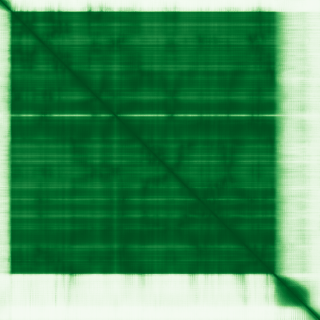
Mean pLDDT
89.9/ 100
Confident
529 residues
Confidence breakdown
- Very high(≥ 90)82%
- Confident(70–90)8%
- Low(50–70)3%
- Very low(< 50)8%
Open interactive 3D viewer
AlphaFold (Jumper et al., 2021) · CC BY 4.0
tyrosinase
Annotations refreshed 2 months ago.
Diagnostic Grade (Green)
Albinism or congenital nystagmus
BIALLELIC, autosomal or pseudoautosomalDDG2P
BIALLELIC, autosomal or pseudoautosomalInfantile nystagmus
BIALLELIC, autosomal or pseudoautosomalOcular and oculo-cutaneous albinism
BIALLELIC, autosomal or pseudoautosomalPigmentary skin disorders
BIALLELIC, autosomal or pseudoautosomalFetal anomalies
BIALLELIC, autosomal or pseudoautosomalGlaucoma (developmental)
Intellectual disability
BIALLELIC, autosomal or pseudoautosomal+3 more panels — install the extension to see the full list inline on any page.
oculocutaneous albinism type 1A
oculocutaneous albinism type 1B
oculocutaneous albinism type 1
Abnormality of skin pigmentation
oculocutaneous albinism
Ocular albinism with congenital sensorineural deafness
oculocutaneous albinism type 6
vitiligo
temperature-sensitive oculocutaneous albinism type 1
melanoma
Score is the Open Targets composite evidence score (0-1). Higher = stronger gene-disease association.
Tyrosinase
This is a copper-containing oxidase that functions in the formation of pigments such as melanins and other polyphenolic compounds. Catalyzes the initial and rate limiting step in the cascade of reactions leading to melanin production from tyrosine (By similarity). In addition to hydroxylating tyrosine to DOPA (3,4-dihydroxyphenylalanine), also catalyzes the oxidation of DOPA to DOPA-quinone, and possibly the oxidation of DHI (5,6-dihydroxyindole) to indole-5,6 quinone (PubMed:28661582)
Curated MONDO disease pages that list TYR among their top associated genes.
TYR · P14679
Mean pLDDT
89.9/ 100
Confident
529 residues
Confidence breakdown
AlphaFold (Jumper et al., 2021) · CC BY 4.0