
AlphaFold predicted structure
UBA5 · Q9GZZ9
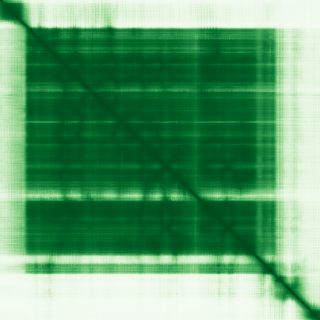
Mean pLDDT
86.8/ 100
Confident
404 residues
Confidence breakdown
- Very high(≥ 90)67%
- Confident(70–90)15%
- Low(50–70)13%
- Very low(< 50)5%
Open interactive 3D viewer
AlphaFold (Jumper et al., 2021) · CC BY 4.0
ubiquitin like modifier activating enzyme 5
Annotations refreshed 2 months ago.
Diagnostic Grade (Green)
DDG2P
BIALLELIC, autosomal or pseudoautosomalEarly onset or syndromic epilepsy
BIALLELIC, autosomal or pseudoautosomalHereditary ataxia with onset in adulthood
BIALLELIC, autosomal or pseudoautosomalIntellectual disability
BIALLELIC, autosomal or pseudoautosomalSevere microcephaly
BIALLELIC, autosomal or pseudoautosomalFetal anomalies
BIALLELIC, autosomal or pseudoautosomalHereditary neuropathy or pain disorder
BIALLELIC, autosomal or pseudoautosomaldevelopmental and epileptic encephalopathy, 44
spinocerebellar ataxia, autosomal recessive 24
Childhood-onset autosomal recessive slowly progressive spinocerebellar ataxia
neurodegenerative disease
Intellectual disability
hereditary disease
developmental and epileptic encephalopathy
genetic developmental and epileptic encephalopathy
undetermined early-onset epileptic encephalopathy
dengue disease
Score is the Open Targets composite evidence score (0-1). Higher = stronger gene-disease association.
Ubiquitin-like modifier-activating enzyme 5
E1-like enzyme which specifically catalyzes the first step in ufmylation (PubMed:15071506, PubMed:18442052, PubMed:20368332, PubMed:25219498, PubMed:26929408, PubMed:27545674, PubMed:27545681, PubMed:27653677, PubMed:30412706, PubMed:30626644, PubMed:34588452). Activates UFM1 by first adenylating its C-terminal glycine residue with ATP, and thereafter linking this residue to the side chain of a cysteine residue in E1, yielding a UFM1-E1 thioester and free AMP (PubMed:20368332, PubMed:26929408, PubMed:27653677, PubMed:30412706). Activates UFM1 via a trans-binding mechanism, in which UFM1 interacts with distinct sites in both subunits of the UBA5 homodimer (PubMed:27653677). Trans-binding also promotes stabilization of the UBA5 homodimer, and enhances ATP-binding (PubMed:29295865). Transfer of UFM1 from UBA5 to the E2-like enzyme UFC1 also takes place using a trans mechanism (PubMed:27653677, PubMed:34588452). Ufmylation plays a key role in various processes, such as ribosome recycling, response to DNA damage, interferon response or reticulophagy (also called ER-phagy) (PubMed:30412706, PubMed:32160526, PubMed:35394863). Ufmylation is essential for erythroid differentiation of both megakaryocytes and erythrocytes (By similarity)
UBA5 · Q9GZZ9
Mean pLDDT
86.8/ 100
Confident
404 residues
Confidence breakdown
AlphaFold (Jumper et al., 2021) · CC BY 4.0