
AlphaFold predicted structure
UBQLN2 · Q9UHD9
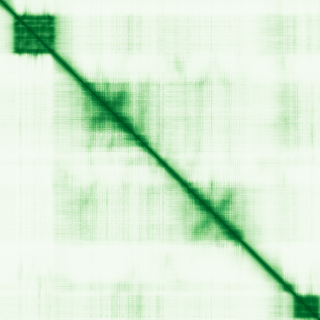
Mean pLDDT
61.0/ 100
Low
624 residues
Confidence breakdown
- Very high(≥ 90)3%
- Confident(70–90)27%
- Low(50–70)40%
- Very low(< 50)30%
Open interactive 3D viewer
AlphaFold (Jumper et al., 2021) · CC BY 4.0
ubiquilin 2
Annotations refreshed 2 months ago.
Diagnostic Grade (Green)
Adult onset neurodegenerative disorder
X-LINKED: hemizygous mutation in males, monoallelic mutations in females may cause disease (may be less severe, later onset than males)Amyotrophic lateral sclerosis/motor neuron disease
X-LINKED: hemizygous mutation in males, monoallelic mutations in females may cause disease (may be less severe, later onset than males)Early onset dementia (encompassing fronto-temporal dementia and prion disease)
X-LINKED: hemizygous mutation in males, monoallelic mutations in females may cause disease (may be less severe, later onset than males)amyotrophic lateral sclerosis type 15
amyotrophic lateral sclerosis
familial amyotrophic lateral sclerosis
amyotrophic lateral sclerosis, dominant
hypertensive disorder
vascular dementia
frontotemporal dementia
Alzheimer disease
lung adenocarcinoma
neoplasm
Score is the Open Targets composite evidence score (0-1). Higher = stronger gene-disease association.
Ubiquilin-2
Plays an important role in the regulation of different protein degradation mechanisms and pathways including ubiquitin-proteasome system (UPS), autophagy and the endoplasmic reticulum-associated protein degradation (ERAD) pathway. Mediates the proteasomal targeting of misfolded or accumulated proteins for degradation by binding (via UBA domain) to their polyubiquitin chains and by interacting (via ubiquitin-like domain) with the subunits of the proteasome (PubMed:10983987). Plays a role in the ERAD pathway via its interaction with ER-localized proteins FAF2/UBXD8 and HERPUD1 and may form a link between the polyubiquitinated ERAD substrates and the proteasome (PubMed:18307982, PubMed:24215460). Involved in the regulation of macroautophagy and autophagosome formation; required for maturation of autophagy-related protein LC3 from the cytosolic form LC3-I to the membrane-bound form LC3-II and may assist in the maturation of autophagosomes to autolysosomes by mediating autophagosome-lysosome fusion (PubMed:19148225, PubMed:20529957). Negatively regulates the endocytosis of GPCR receptors: AVPR2 and ADRB2, by specifically reducing the rate at which receptor-arrestin complexes concentrate in clathrin-coated pits (CCPs) (PubMed:18199683)
UBQLN2 · Q9UHD9
Mean pLDDT
61.0/ 100
Low
624 residues
Confidence breakdown
AlphaFold (Jumper et al., 2021) · CC BY 4.0