
AlphaFold predicted structure
UBR7 · Q8N806
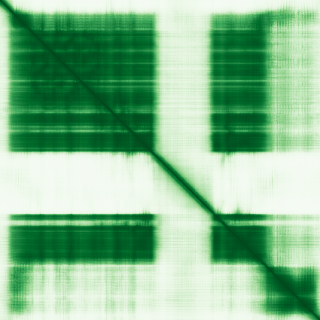
Mean pLDDT
75.4/ 100
Confident
425 residues
Confidence breakdown
- Very high(≥ 90)44%
- Confident(70–90)26%
- Low(50–70)6%
- Very low(< 50)24%
Open interactive 3D viewer
AlphaFold (Jumper et al., 2021) · CC BY 4.0
ubiquitin protein ligase E3 component n-recognin 7
Annotations refreshed 3 months ago.
Diagnostic Grade (Green)
DDG2P
BIALLELIC, autosomal or pseudoautosomalEarly onset or syndromic epilepsy
BIALLELIC, autosomal or pseudoautosomalFetal anomalies
BIALLELIC, autosomal or pseudoautosomalIntellectual disability
BIALLELIC, autosomal or pseudoautosomalLi-Campeau syndrome
hypothyroidism
epilepsy
Intellectual disability
autosomal recessive non-syndromic intellectual disability
complex neurodevelopmental disorder
Mild intellectual disability
corneal degeneration
Global developmental delay
neoplasm
Score is the Open Targets composite evidence score (0-1). Higher = stronger gene-disease association.
Putative E3 ubiquitin-protein ligase UBR7
E3 ubiquitin-protein ligase which is a component of the N-end rule pathway. Recognizes and binds to proteins bearing specific N-terminal residues that are destabilizing according to the N-end rule, leading to their ubiquitination and subsequent degradation
UBR7 · Q8N806
Mean pLDDT
75.4/ 100
Confident
425 residues
Confidence breakdown
AlphaFold (Jumper et al., 2021) · CC BY 4.0