
AlphaFold predicted structure
UBTF · P17480
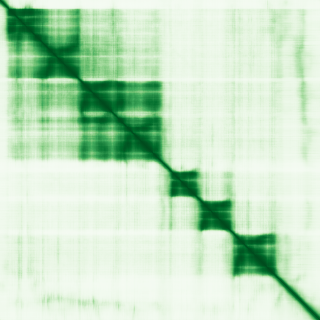
Mean pLDDT
77.3/ 100
Confident
764 residues
Confidence breakdown
- Very high(≥ 90)42%
- Confident(70–90)33%
- Low(50–70)5%
- Very low(< 50)21%
Open interactive 3D viewer
AlphaFold (Jumper et al., 2021) · CC BY 4.0
upstream binding transcription factor
Annotations refreshed 2 months ago.
Diagnostic Grade (Green)
Ataxia and cerebellar anomalies - narrow panel
MONOALLELIC, autosomal or pseudoautosomal, NOT imprintedChildhood onset dystonia, chorea or related movement disorder
MONOALLELIC, autosomal or pseudoautosomal, NOT imprintedDDG2P
MONOALLELIC, autosomal or pseudoautosomal, imprinted status unknownIntellectual disability
MONOALLELIC, autosomal or pseudoautosomal, imprinted status unknownFetal anomalies
MONOALLELIC, autosomal or pseudoautosomal, imprinted status unknownchildhood-onset motor and cognitive regression syndrome with extrapyramidal movement disorder
hereditary disease
rare syndromic intellectual disability
neurodegenerative disease
diverticular disease
Abnormality of the skeletal system
upper respiratory tract disorder
neurodevelopmental disorder
hemolysis
acute myeloid leukemia
Score is the Open Targets composite evidence score (0-1). Higher = stronger gene-disease association.
Nucleolar transcription factor 1
Recognizes the ribosomal RNA gene promoter and activates transcription mediated by RNA polymerase I (Pol I) through cooperative interactions with the transcription factor SL1/TIF-IB complex. It binds specifically to the upstream control element and can activate Pol I promoter escape
UBTF · P17480
Mean pLDDT
77.3/ 100
Confident
764 residues
Confidence breakdown
AlphaFold (Jumper et al., 2021) · CC BY 4.0