AlphaFold predicted structure
UNC119 · Q13432
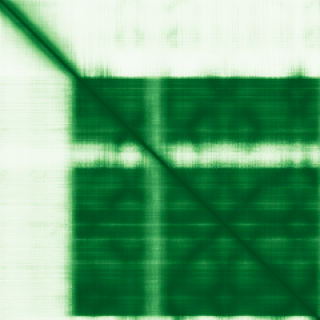
Mean pLDDT
77.9/ 100
Confident
240 residues
Confidence breakdown
- Very high(≥ 90)63%
- Confident(70–90)5%
- Low(50–70)8%
- Very low(< 50)24%
AlphaFold (Jumper et al., 2021) · CC BY 4.0
unc-119 lipid binding chaperone
Annotations refreshed 9 hours ago.
Moderate Evidence (Amber)
Retinal disorders
MONOALLELIC, autosomal or pseudoautosomal, imprinted status unknownCOVID-19 research
MONOALLELIC, autosomal or pseudoautosomal, imprinted status unknownGlaucoma (developmental)
Primary immunodeficiency or monogenic inflammatory bowel disease
MONOALLELIC, autosomal or pseudoautosomal, imprinted status unknownStructural eye disease
MONOALLELIC, autosomal or pseudoautosomal, NOT imprintedcone-rod dystrophy 24
idiopathic CD4 lymphocytopenia
Cone rod dystrophy
cone-rod dystrophy
Rod-cone dystrophy
neurodegenerative disease
Macular dystrophy
retinal disorder
retinitis pigmentosa
Progressive cone dystrophy
Score is the Open Targets composite evidence score (0-1). Higher = stronger gene-disease association.
Protein unc-119 homolog A
Involved in synaptic functions in photoreceptor cells, the signal transduction in immune cells as a Src family kinase activator, endosome recycling, the uptake of bacteria and endocytosis, protein trafficking in sensory neurons and as lipid-binding chaperone with specificity for a diverse subset of myristoylated proteins. Specifically binds the myristoyl moiety of a subset of N-terminally myristoylated proteins and is required for their localization. Binds myristoylated GNAT1 and is required for G protein localization and trafficking in sensory neurons. Probably plays a role in trafficking proteins in photoreceptor cells. Plays important roles in mediating Src family kinase signals for the completion of cytokinesis via RAB11A
UNC119 · Q13432

Mean pLDDT
77.9/ 100
Confident
240 residues
Confidence breakdown
AlphaFold (Jumper et al., 2021) · CC BY 4.0