AlphaFold predicted structure
UNC13D · Q70J99
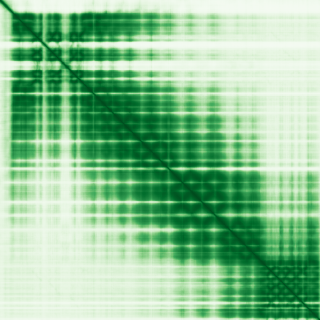
Mean pLDDT
84.9/ 100
Confident
1,090 residues
Confidence breakdown
- Very high(≥ 90)61%
- Confident(70–90)26%
- Low(50–70)5%
- Very low(< 50)8%
AlphaFold (Jumper et al., 2021) · CC BY 4.0
unc-13 homolog D
Annotations refreshed 10 hours ago.
Diagnostic Grade (Green)
COVID-19 research
BIALLELIC, autosomal or pseudoautosomalFetal anomalies
BIALLELIC, autosomal or pseudoautosomalPrimary immunodeficiency or monogenic inflammatory bowel disease
BIALLELIC, autosomal or pseudoautosomalBleeding and platelet disorders
BIALLELIC, autosomal or pseudoautosomalHaematological malignancies cancer susceptibility
BOTH monoallelic and biallelic, autosomal or pseudoautosomalInherited white matter disorders
BIALLELIC, autosomal or pseudoautosomalWhite matter disorders and cerebral calcification - narrow panel
BIALLELIC, autosomal or pseudoautosomalFamilial hemophagocytic lymphohistiocytosis
autoinflammatory syndrome
hereditary hemophagocytic lymphohistiocytosis
neurodegenerative disease
cardiovascular disorder
coronary artery disorder
hereditary disease
response to statin
Hypercholesterolemia
metabolic disease
Score is the Open Targets composite evidence score (0-1). Higher = stronger gene-disease association.
Protein unc-13 homolog D
Plays a role in cytotoxic granule exocytosis in lymphocytes. Required for both granule maturation and granule docking and priming at the immunologic synapse. Regulates assembly of recycling and late endosomal structures, leading to the formation of an endosomal exocytic compartment that fuses with perforin-containing granules at the immunologic synapse and licences them for exocytosis. Regulates Ca(2+)-dependent secretory lysosome exocytosis in mast cells
UNC13D · Q70J99

Mean pLDDT
84.9/ 100
Confident
1,090 residues
Confidence breakdown
AlphaFold (Jumper et al., 2021) · CC BY 4.0