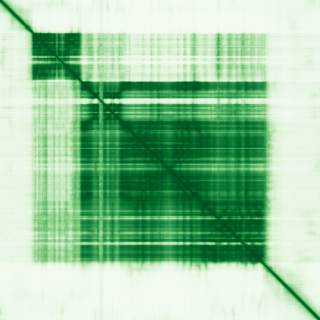
Regulator of nonsense transcripts 1
RNA-dependent helicase required for nonsense-mediated decay (NMD) of aberrant mRNAs containing premature stop codons and which modulates the expression level of normal mRNAs (PubMed:11163187, PubMed:16086026, PubMed:18172165, PubMed:21145460, PubMed:21419344, PubMed:24726324). ATP-dependent 5'-3' helicase active on RNA:DNA substrates with a 5'-RNA extension (PubMed:18066079, PubMed:21419344, PubMed:23275559, PubMed:26138914). ATP-dependent 5'-3' helicase active on RNA:RNA substrates with a 5'-RNA extension (PubMed:26138914). ATP-dependent 5'-3' helicase active on DNA:DNA substrates with a 5'-DNA extension (PubMed:10999600, PubMed:26138914, PubMed:30218034). Is recruited to mRNAs upon translation termination and undergoes a cycle of phosphorylation and dephosphorylation; its phosphorylation appears to be a key step in NMD (PubMed:11544179, PubMed:25220460). Recruited by release factors to stalled ribosomes together with the SMG1C protein kinase complex to form the transient SURF (SMG1-UPF1-eRF1-eRF3) complex (PubMed:19417104). In EJC-dependent NMD, the SURF complex associates with the exon junction complex (EJC) (located 50-55 or more nucleotides downstream from the termination codon) through UPF2 and allows the formation of an UPF1-UPF2-UPF3 surveillance complex which is believed to activate NMD (PubMed:21419344). Phosphorylated UPF1 is recognized by EST1B/SMG5, SMG6 and SMG7 which are thought to provide a link to the mRNA degradation machinery involving exonucleolytic and endonucleolytic pathways, and to serve as adapters to protein phosphatase 2A (PP2A), thereby triggering UPF1 dephosphorylation and allowing the recycling of NMD factors (PubMed:12554878). UPF1 can also activate NMD without UPF2 or UPF3, and in the absence of the NMD-enhancing downstream EJC indicative for alternative NMD pathways (PubMed:18447585). Plays a role in replication-dependent histone mRNA degradation at the end of phase S; the function is independent of UPF2 (PubMed:16086026, PubMed:18172165). For the recognition of premature termination codons (PTC) and initiation of NMD a competitive interaction between UPF1 and PABPC1 with the ribosome-bound release factors is proposed (PubMed:18447585, PubMed:25220460). The ATPase activity of UPF1 is required for disassembly of mRNPs undergoing NMD (PubMed:21145460). Together with UPF2 and dependent on TDRD6, mediates the degradation of mRNA harboring long 3'UTR by inducing the NMD machinery (By similarity). Has ssDNA-stimulated ATPase activity (poly(dT) and poly(dA) are most stimulatory) (PubMed:10999600). Binds RNA; addition of ATP decreases RNA-binding (PubMed:10999600, PubMed:18066079, PubMed:21419344)