
AlphaFold predicted structure
UROD · P06132
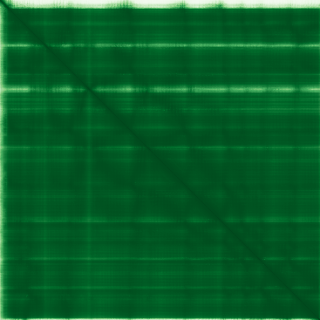
Mean pLDDT
96.8/ 100
Very high
367 residues
Confidence breakdown
- Very high(≥ 90)94%
- Confident(70–90)4%
- Low(50–70)1%
- Very low(< 50)1%
Open interactive 3D viewer
AlphaFold (Jumper et al., 2021) · CC BY 4.0
uroporphyrinogen decarboxylase
Annotations refreshed 2 months ago.
Diagnostic Grade (Green)
Cutaneous photosensitivity with a likely genetic cause
MONOALLELIC, autosomal or pseudoautosomal, imprinted status unknownLikely inborn error of metabolism
MONOALLELIC, autosomal or pseudoautosomal, imprinted status unknownNon-acute porphyrias
MONOALLELIC, autosomal or pseudoautosomal, imprinted status unknownUndiagnosed metabolic disorders
MONOALLELIC, autosomal or pseudoautosomal, imprinted status unknownChildhood onset dystonia, chorea or related movement disorder
familial porphyria cutanea tarda
hepatoerythropoietic porphyria
porphyria cutanea tarda
UROD-related inherited porphyria
neurodegenerative disease
leukemia
sporadic porphyria cutanea tarda
hereditary disease
osteoarthritis
acute erythroid leukemia
Score is the Open Targets composite evidence score (0-1). Higher = stronger gene-disease association.
Uroporphyrinogen decarboxylase
Catalyzes the sequential decarboxylation of the four acetate side chains of uroporphyrinogen to form coproporphyrinogen and participates in the fifth step in the heme biosynthetic pathway (PubMed:11069625, PubMed:11719352, PubMed:14633982, PubMed:18004775, PubMed:21668429). Isomer I or isomer III of uroporphyrinogen may serve as substrate, but only coproporphyrinogen III can ultimately be converted to heme (PubMed:11069625, PubMed:11719352, PubMed:14633982, PubMed:21668429). In vitro also decarboxylates pentacarboxylate porphyrinogen I (PubMed:12071824)
UROD · P06132
Mean pLDDT
96.8/ 100
Very high
367 residues
Confidence breakdown
AlphaFold (Jumper et al., 2021) · CC BY 4.0