
AlphaFold predicted structure
VCP · P55072
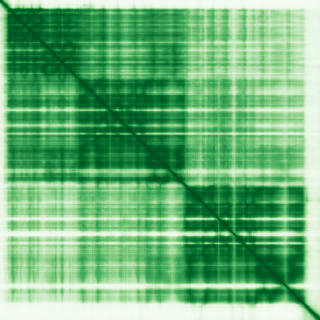
Mean pLDDT
82.6/ 100
Confident
806 residues
Confidence breakdown
- Very high(≥ 90)42%
- Confident(70–90)43%
- Low(50–70)7%
- Very low(< 50)7%
Open interactive 3D viewer
AlphaFold (Jumper et al., 2021) · CC BY 4.0
valosin containing protein
Annotations refreshed 3 months ago.
Diagnostic Grade (Green)
Adult onset neurodegenerative disorder
MONOALLELIC, autosomal or pseudoautosomal, imprinted status unknownAmyotrophic lateral sclerosis/motor neuron disease
MONOALLELIC, autosomal or pseudoautosomal, imprinted status unknownDistal myopathies
MONOALLELIC, autosomal or pseudoautosomal, NOT imprintedEarly onset dementia (encompassing fronto-temporal dementia and prion disease)
MONOALLELIC, autosomal or pseudoautosomal, NOT imprintedHereditary neuropathy or pain disorder
MONOALLELIC, autosomal or pseudoautosomal, imprinted status unknownIntellectual disability
MONOALLELIC, autosomal or pseudoautosomal, NOT imprintedLimb girdle muscular dystrophies, myofibrillar myopathies and distal myopathies
MONOALLELIC, autosomal or pseudoautosomal, NOT imprintedFetal anomalies
MONOALLELIC, autosomal or pseudoautosomal, NOT imprinted+7 more panels — install the extension to see the full list inline on any page.
inclusion body myopathy with Paget disease of bone and frontotemporal dementia type 1
frontotemporal dementia and/or amyotrophic lateral sclerosis 6
inclusion body myopathy with Paget disease of bone and frontotemporal dementia
Charcot-Marie-Tooth disease type 2Y
amyotrophic lateral sclerosis
hereditary disease
neurodegenerative disease
frontotemporal dementia with motor neuron disease
cystic fibrosis
holoprosencephaly
Score is the Open Targets composite evidence score (0-1). Higher = stronger gene-disease association.
Transitional endoplasmic reticulum ATPase
Necessary for the fragmentation of Golgi stacks during mitosis and for their reassembly after mitosis. Involved in the formation of the transitional endoplasmic reticulum (tER). The transfer of membranes from the endoplasmic reticulum to the Golgi apparatus occurs via 50-70 nm transition vesicles which derive from part-rough, part-smooth transitional elements of the endoplasmic reticulum (tER). Vesicle budding from the tER is an ATP-dependent process. The ternary complex containing UFD1, VCP and NPLOC4 binds ubiquitinated proteins and is necessary for the export of misfolded proteins from the ER to the cytoplasm, where they are degraded by the proteasome. The NPLOC4-UFD1-VCP complex regulates spindle disassembly at the end of mitosis and is necessary for the formation of a closed nuclear envelope. Regulates E3 ubiquitin-protein ligase activity of RNF19A. Component of the VCP/p97-AMFR/gp78 complex that participates in the final step of the sterol-mediated ubiquitination and endoplasmic reticulum-associated degradation (ERAD) of HMGCR. Mediates the endoplasmic reticulum-associated degradation of CHRNA3 in cortical neurons as part of the STUB1-VCP-UBXN2A complex (PubMed:26265139). Involved in endoplasmic reticulum stress-induced pre-emptive quality control, a mechanism that selectively attenuates the translocation of newly synthesized proteins into the endoplasmic reticulum and reroutes them to the cytosol for proteasomal degradation (PubMed:26565908). Involved in clearance process by mediating G3BP1 extraction from stress granules (PubMed:29804830, PubMed:34739333). Also involved in DNA damage response: recruited to double-strand breaks (DSBs) sites in a RNF8- and RNF168-dependent manner and promotes the recruitment of TP53BP1 at DNA damage sites (PubMed:22020440, PubMed:22120668). Recruited to stalled replication forks by SPRTN: may act by mediating extraction of DNA polymerase eta (POLH) to prevent excessive translesion DNA synthesis and limit the incidence of mutations induced by DNA damage (PubMed:23042605, PubMed:23042607). Together with SPRTN metalloprotease, involved in the repair of covalent DNA-protein cross-links (DPCs) during DNA synthesis (PubMed:32152270). Involved in interstrand cross-link repair in response to replication stress by mediating unloading of the ubiquitinated CMG helicase complex (By similarity). Mediates extraction of PARP1 trapped to chromatin: recognizes and binds ubiquitinated PARP1 and promotes its removal (PubMed:35013556). Required for cytoplasmic retrotranslocation of stressed/damaged mitochondrial outer-membrane proteins and their subsequent proteasomal degradation (PubMed:16186510, PubMed:21118995). Essential for the maturation of ubiquitin-containing autophagosomes and the clearance of ubiquitinated protein by autophagy (PubMed:20104022, PubMed:27753622, PubMed:38762759). Acts as a negative regulator of type I interferon production by interacting with RIGI: interaction takes place when RIGI is ubiquitinated via 'Lys-63'-linked ubiquitin on its CARD domains, leading to recruit RNF125 and promote ubiquitination and degradation of RIGI (PubMed:26471729). May play a role in the ubiquitin-dependent sorting of membrane proteins to lysosomes where they undergo degradation (PubMed:21822278). May more particularly play a role in caveolins sorting in cells (PubMed:21822278, PubMed:23335559). By controlling the steady-state expression of the IGF1R receptor, indirectly regulates the insulin-like growth factor receptor signaling pathway (PubMed:26692333)
VCP · P55072
Mean pLDDT
82.6/ 100
Confident
806 residues
Confidence breakdown
AlphaFold (Jumper et al., 2021) · CC BY 4.0