Skip to content
GenoLensGenoLens

VLDLR

Chr 9p24.2

very low density lipoprotein receptor

Aliases:
CARMQ1, CHRMQ1, VLDLRCH
MANE:
ENST00000382100.8

Annotations refreshed 1 month ago.

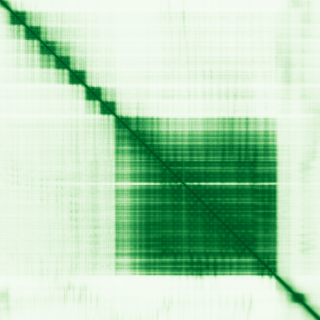
Predicted protein structure

Clinical relevance (Genomics England PanelApp)

Diagnostic Grade (Green)

  • Ataxia and cerebellar anomalies - narrow panel

    BIALLELIC, autosomal or pseudoautosomal
  • Cerebellar hypoplasia

    BIALLELIC, autosomal or pseudoautosomal
  • DDG2P

    BIALLELIC, autosomal or pseudoautosomal
  • Fetal anomalies

    BIALLELIC, autosomal or pseudoautosomal
  • Hereditary ataxia

    BIALLELIC, autosomal or pseudoautosomal
  • Hereditary ataxia with onset in adulthood

    BIALLELIC, autosomal or pseudoautosomal
  • Intellectual disability

    BIALLELIC, autosomal or pseudoautosomal
  • Malformations of cortical development

    BIALLELIC, autosomal or pseudoautosomal

+4 more panels — install the extension to see the full list inline on any page.

Disease associations (Open Targets)

  • Dysequilibrium syndrome

    0.79
  • Cerebellar hypoplasia

    0.55
  • cerebellar ataxia, intellectual disability, and dysequilibrium

    0.38
  • hereditary disease

    0.34
  • Abnormality of the nervous system

    0.34
  • hyperlipidemia

    0.33
  • alcohol drinking

    0.32
  • metabolic disease

    0.32
  • placental abruption

    0.29
  • adolescent idiopathic scoliosis

    0.28

Score is the Open Targets composite evidence score (0-1). Higher = stronger gene-disease association.

Protein function (UniProt)

Very low-density lipoprotein receptor

Multifunctional cell surface receptor that binds VLDL and transports it into cells by endocytosis and therefore plays an important role in energy metabolism. Also binds to a wide range of other molecules including Reelin/RELN or apolipoprotein E/APOE-containing ligands as well as clusterin/CLU (PubMed:24381170, PubMed:30873003). In the off-state of the pathway, forms homooligomers or heterooligomers with LRP8 (PubMed:30873003). Upon binding to ligands, homooligomers are rearranged to higher order receptor clusters that transmit the extracellular RELN signal to intracellular signaling processes by binding to DAB1 (PubMed:30873003). This interaction results in phosphorylation of DAB1 leading to the ultimate cell responses required for the correct positioning of newly generated neurons. Later, mediates a stop signal for migrating neurons, preventing them from entering the marginal zone (By similarity)

Data sources: HGNC (CC BY 4.0), AlphaFold (CC BY 4.0, Jumper et al. Nature 2021), Genomics England PanelApp (CC BY 4.0), ClinGen, Open Targets (CC0), UniProt.

Not for sole clinical decision-making. Always verify against primary sources.