
AlphaFold predicted structure
VRK1 · Q99986
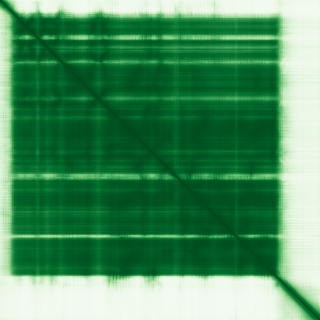
Mean pLDDT
85.0/ 100
Confident
396 residues
Confidence breakdown
- Very high(≥ 90)74%
- Confident(70–90)6%
- Low(50–70)2%
- Very low(< 50)17%
Open interactive 3D viewer
AlphaFold (Jumper et al., 2021) · CC BY 4.0
VRK serine/threonine kinase 1
Annotations refreshed 2 months ago.
Diagnostic Grade (Green)
Adult onset neurodegenerative disorder
BIALLELIC, autosomal or pseudoautosomalAtaxia and cerebellar anomalies - narrow panel
BIALLELIC, autosomal or pseudoautosomalCerebellar hypoplasia
BIALLELIC, autosomal or pseudoautosomalDDG2P
BIALLELIC, autosomal or pseudoautosomalFetal anomalies
BIALLELIC, autosomal or pseudoautosomalHereditary ataxia
BIALLELIC, autosomal or pseudoautosomalHereditary neuropathy
BIALLELIC, autosomal or pseudoautosomalHereditary neuropathy or pain disorder
BIALLELIC, autosomal or pseudoautosomal+5 more panels — install the extension to see the full list inline on any page.
pontocerebellar hypoplasia type 1A
pontocerebellar hypoplasia type 1
distal hereditary motor neuropathy
autosomal recessive non-syndromic intellectual disability
pontocerebellar hypoplasia
neuronopathy, distal hereditary motor, autosomal recessive 10
neurodegenerative disease
hereditary disease
spinal muscular atrophy
microcephaly-complex motor and sensory axonal neuropathy syndrome
Score is the Open Targets composite evidence score (0-1). Higher = stronger gene-disease association.
Serine/threonine-protein kinase VRK1
Serine/threonine kinase involved in the regulation of key cellular processes including the cell cycle, nuclear condensation, transcription regulation, and DNA damage response (PubMed:14645249, PubMed:18617507, PubMed:19103756, PubMed:33076429). Controls chromatin organization and remodeling by mediating phosphorylation of histone H3 on 'Thr-4' and histone H2AX (H2aXT4ph) (PubMed:31527692, PubMed:37179361). It also phosphorylates KAT5 in response to DNA damage, promoting KAT5 association with chromatin and histone acetyltransferase activity (PubMed:33076429). Is involved in the regulation of cell cycle progression of neural progenitors, and is required for proper cortical neuronal migration (By similarity). Is involved in neurite elongation and branching in motor neurons, and has an essential role in Cajal bodies assembly, acting through COIL phosphorylation and the control of coilin degradation (PubMed:21920476, PubMed:31090908, PubMed:31527692). Involved in Golgi disassembly during the cell cycle: following phosphorylation by PLK3 during mitosis, it is required to induce Golgi fragmentation (PubMed:19103756). Phosphorylates BANF1: disrupts its ability to bind DNA, reduces its binding to LEM domain-containing proteins and causes its relocalization from the nucleus to the cytoplasm (PubMed:16495336). Phosphorylates TP53BP1 and p53/TP53 on 'Thr-18', preventing the interaction between p53/TP53 and MDM2 (PubMed:10951572, PubMed:31527692). Phosphorylates ATF2 which activates its transcriptional activity (PubMed:15105425). Phosphorylates JUN (PubMed:31527692)
VRK1 · Q99986
Mean pLDDT
85.0/ 100
Confident
396 residues
Confidence breakdown
AlphaFold (Jumper et al., 2021) · CC BY 4.0