
AlphaFold predicted structure
WDR48 · Q8TAF3
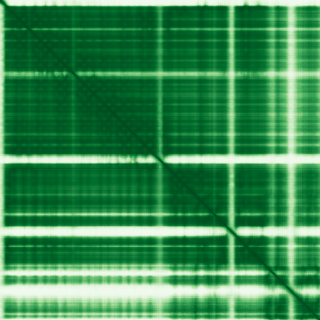
Mean pLDDT
88.9/ 100
Confident
677 residues
Confidence breakdown
- Very high(≥ 90)75%
- Confident(70–90)13%
- Low(50–70)5%
- Very low(< 50)7%
Open interactive 3D viewer
AlphaFold (Jumper et al., 2021) · CC BY 4.0
WD repeat domain 48
Annotations refreshed 3 months ago.
Moderate Evidence (Amber)
Adult onset hereditary spastic paraplegia
BIALLELIC, autosomal or pseudoautosomalChildhood onset hereditary spastic paraplegia
BIALLELIC, autosomal or pseudoautosomalAdult onset neurodegenerative disorder
BIALLELIC, autosomal or pseudoautosomalHereditary spastic paraplegia
BIALLELIC, autosomal or pseudoautosomalneurodegenerative disease
cancer
autosomal recessive spastic paraplegia type 60
cornea transplantation
Spastic paraplegia
venous thromboembolism
Thromboembolism
hereditary spastic paraplegia
hepatocellular carcinoma
colitis
Score is the Open Targets composite evidence score (0-1). Higher = stronger gene-disease association.
WD repeat-containing protein 48
Regulator of deubiquitinating complexes, which acts as a strong activator of USP1, USP12 and USP46 (PubMed:18082604, PubMed:19075014, PubMed:26388029, PubMed:31253762). Enhances the USP1-mediated deubiquitination of FANCD2; USP1 being almost inactive by itself (PubMed:18082604, PubMed:31253762). Activates deubiquitination by increasing the catalytic turnover without increasing the affinity of deubiquitinating enzymes for the substrate (PubMed:19075014, PubMed:27373336). Also activates deubiquitinating activity of complexes containing USP12 (PubMed:19075014, PubMed:27373336, PubMed:27650958). In complex with USP12, acts as a potential tumor suppressor by positively regulating PHLPP1 stability (PubMed:24145035). Docks at the distal end of the USP12 fingers domain and induces a cascade of structural changes leading to the activation of the enzyme (PubMed:27373336, PubMed:27650958). Together with RAD51AP1, promotes DNA repair by stimulating RAD51-mediated homologous recombination (PubMed:27239033, PubMed:27463890, PubMed:32350107). Binds single-stranded DNA (ssDNA) and double-stranded DNA (dsDNA) (PubMed:27239033, PubMed:31253762, PubMed:32350107). DNA-binding is required both for USP1-mediated deubiquitination of FANCD2 and stimulation of RAD51-mediated homologous recombination: both WDR48/UAF1 and RAD51AP1 have coordinated role in DNA-binding during these processes (PubMed:31253762, PubMed:32350107). Together with ATAD5 and by regulating USP1 activity, has a role in PCNA-mediated translesion synthesis (TLS) by deubiquitinating monoubiquitinated PCNA (PubMed:20147293). Together with ATAD5, has a role in recruiting RAD51 to stalled forks during replication stress (PubMed:31844045)
WDR48 · Q8TAF3
Mean pLDDT
88.9/ 100
Confident
677 residues
Confidence breakdown
AlphaFold (Jumper et al., 2021) · CC BY 4.0