Skip to content
GenoLensGenoLens

WFS1

Chr 4p16.1

wolframin ER transmembrane glycoprotein

Aliases:
DIDMOAD, WFS
MANE:
ENST00000226760.5

Annotations refreshed 1 month ago.

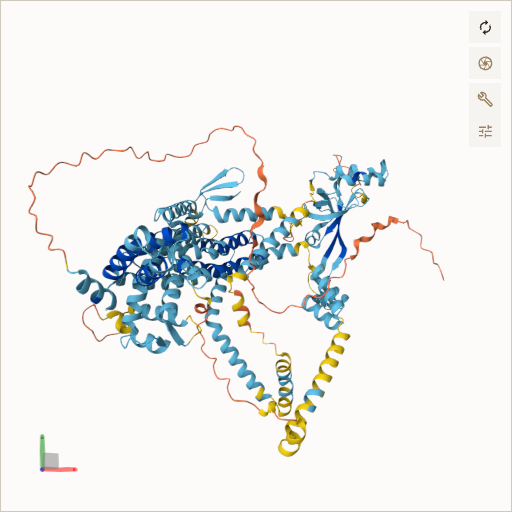
Predicted protein structure

Clinical relevance (Genomics England PanelApp)

Diagnostic Grade (Green)

  • Ataxia and cerebellar anomalies - narrow panel

    BIALLELIC, autosomal or pseudoautosomal
  • Bilateral congenital or childhood onset cataracts

    BOTH monoallelic and biallelic, autosomal or pseudoautosomal
  • DDG2P

    BOTH monoallelic and biallelic, autosomal or pseudoautosomal
  • Diabetes with additional phenotypes suggestive of a monogenic aetiology

    BOTH monoallelic and biallelic, autosomal or pseudoautosomal
  • Familial diabetes

    BOTH monoallelic and biallelic, autosomal or pseudoautosomal
  • Hereditary ataxia

    BIALLELIC, autosomal or pseudoautosomal
  • Hereditary ataxia with onset in adulthood

    BIALLELIC, autosomal or pseudoautosomal
  • Likely inborn error of metabolism

    BOTH monoallelic and biallelic, autosomal or pseudoautosomal

+16 more panels — install the extension to see the full list inline on any page.

Disease associations (Open Targets)

  • Wolfram syndrome

    0.85
  • Wolfram-like syndrome

    0.82
  • type 2 diabetes mellitus

    0.76
  • autosomal dominant nonsyndromic hearing loss

    0.75
  • cataract

    0.70
  • diabetes mellitus

    0.66
  • autosomal dominant nonsyndromic hearing loss 2A

    0.59
  • Rare genetic deafness

    0.54
  • optic atrophy

    0.54
  • WFS1-related disorder

    0.53

Score is the Open Targets composite evidence score (0-1). Higher = stronger gene-disease association.

Protein function (UniProt)

Wolframin

Participates in the regulation of cellular Ca(2+) homeostasis, at least partly, by modulating the filling state of the endoplasmic reticulum Ca(2+) store (PubMed:16989814). Negatively regulates the ER stress response and positively regulates the stability of V-ATPase subunits ATP6V1A and ATP1B1 by preventing their degradation through an unknown proteasome-independent mechanism (PubMed:23035048)

Curated MONDO disease pages that list WFS1 among their top associated genes.

Data sources: HGNC (CC BY 4.0), AlphaFold (CC BY 4.0, Jumper et al. Nature 2021), Genomics England PanelApp (CC BY 4.0), ClinGen, Open Targets (CC0), UniProt.

Not for sole clinical decision-making. Always verify against primary sources.