
AlphaFold predicted structure
WNT1 · P04628
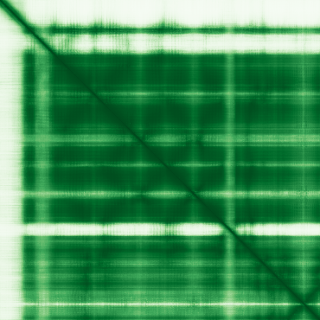
Mean pLDDT
85.9/ 100
Confident
370 residues
Confidence breakdown
- Very high(≥ 90)72%
- Confident(70–90)11%
- Low(50–70)6%
- Very low(< 50)11%
Open interactive 3D viewer
AlphaFold (Jumper et al., 2021) · CC BY 4.0
Wnt family member 1
Annotations refreshed 2 months ago.
Diagnostic Grade (Green)
DDG2P
BIALLELIC, autosomal or pseudoautosomalFetal anomalies
BIALLELIC, autosomal or pseudoautosomalIntellectual disability
BIALLELIC, autosomal or pseudoautosomalOsteogenesis imperfecta
BOTH monoallelic and biallelic (but BIALLELIC mutations cause a more SEVERE disease form), autosomal or pseudoautosomalSkeletal dysplasia
BOTH monoallelic and biallelic (but BIALLELIC mutations cause a more SEVERE disease form), autosomal or pseudoautosomalosteogenesis imperfecta
osteoporosis
hereditary disease
osteogenesis imperfecta type 3
idiopathic juvenile osteoporosis
X-linked osteoporosis with fractures
osteogenesis imperfecta type 4
uterine carcinosarcoma
neurodegenerative disease
bone disorder
Score is the Open Targets composite evidence score (0-1). Higher = stronger gene-disease association.
Proto-oncogene Wnt-1
Ligand for members of the frizzled family of seven transmembrane receptors (Probable). Acts in the canonical Wnt signaling pathway by promoting beta-catenin-dependent transcriptional activation (PubMed:23499309, PubMed:23656646, PubMed:26902720, PubMed:28528193). In some developmental processes, is also a ligand for the coreceptor RYK, thus triggering Wnt signaling (By similarity). Plays an essential role in the development of the embryonic brain and central nervous system (CNS) (By similarity). Has a role in osteoblast function, bone development and bone homeostasis (PubMed:23499309, PubMed:23656646)
WNT1 · P04628
Mean pLDDT
85.9/ 100
Confident
370 residues
Confidence breakdown
AlphaFold (Jumper et al., 2021) · CC BY 4.0