Skip to content
GenoLensGenoLens

WNT10A

Chr 2q35

Wnt family member 10A

MANE:
ENST00000258411.8

Annotations refreshed 1 month ago.

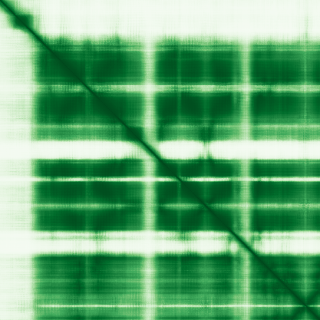
Predicted protein structure

Clinical relevance (Genomics England PanelApp)

Diagnostic Grade (Green)

  • Ectodermal dysplasia

    BIALLELIC, autosomal or pseudoautosomal
  • Ectodermal dysplasia without a known gene mutation

    BIALLELIC, autosomal or pseudoautosomal

Disease associations (Open Targets)

  • odonto-onycho-dermal dysplasia

    0.80
  • tooth agenesis, selective, 4

    0.78
  • Schöpf-Schulz-Passarge syndrome

    0.77
  • tooth agenesis

    0.59
  • ectodermal dysplasia WNT10A related

    0.57
  • hereditary disease

    0.52
  • dentures

    0.48
  • androgenetic alopecia

    0.48
  • Epidermal Inclusion Cyst

    0.46
  • tooth agenesis, selective, 2

    0.43

Score is the Open Targets composite evidence score (0-1). Higher = stronger gene-disease association.

Protein function (UniProt)

Protein Wnt-10a

Ligand for members of the frizzled family of seven transmembrane receptors (Probable). Functions in the canonical Wnt/beta-catenin signaling pathway (By similarity). Plays a role in normal ectoderm development (PubMed:17847007, PubMed:28589954). Required for normal tooth development (PubMed:17847007, PubMed:28589954, PubMed:29178643). Required for normal postnatal development and maintenance of tongue papillae and sweat ducts (PubMed:28589954). Required for normal proliferation of basal cells in tongue filiform papillae, plantar epithelium and sweat ducts. Required for normal expression of keratins in tongue papillae (By similarity). Required for normal expression of KRT9 in foot plant epithelium (PubMed:28589954). Required for normal hair follicle function (PubMed:28589954)

Curated MONDO disease pages that list WNT10A among their top associated genes.

Data sources: HGNC (CC BY 4.0), AlphaFold (CC BY 4.0, Jumper et al. Nature 2021), Genomics England PanelApp (CC BY 4.0), ClinGen, Open Targets (CC0), UniProt.

Not for sole clinical decision-making. Always verify against primary sources.