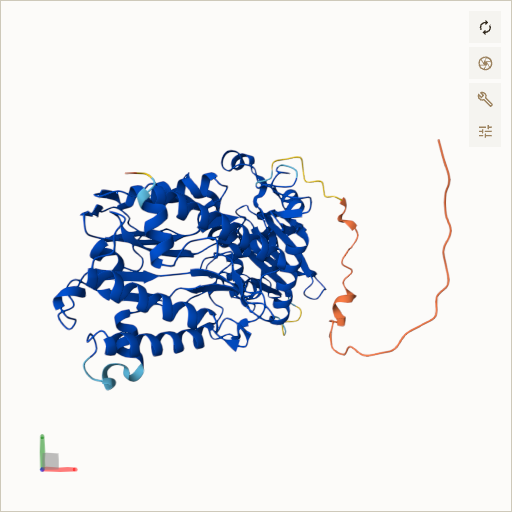
AlphaFold predicted structure
XPNPEP3 · Q9NQH7

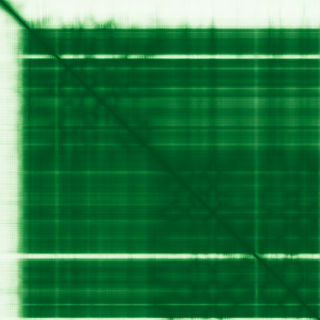
Mean pLDDT
91.9/ 100
Very high
507 residues
Confidence breakdown
- Very high(≥ 90)87%
- Confident(70–90)3%
- Low(50–70)3%
- Very low(< 50)8%
AlphaFold (Jumper et al., 2021) · CC BY 4.0
X-prolyl aminopeptidase 3
Annotations refreshed 1 month ago.
Diagnostic Grade (Green)
Cystic kidney disease
BIALLELIC, autosomal or pseudoautosomalLikely inborn error of metabolism
BIALLELIC, autosomal or pseudoautosomalRare multisystem ciliopathy disorders
BIALLELIC, autosomal or pseudoautosomalRenal ciliopathies
BIALLELIC, autosomal or pseudoautosomalTubulointerstitial kidney disease
BIALLELIC, autosomal or pseudoautosomalUnexplained kidney failure in young people
BIALLELIC, autosomal or pseudoautosomalFetal anomalies
BIALLELIC, autosomal or pseudoautosomalHereditary neuropathy or pain disorder
BIALLELIC, autosomal or pseudoautosomal+10 more panels — install the extension to see the full list inline on any page.
nephronophthisis-like nephropathy 1
nephronophthisis
late-onset nephronophthisis
bipolar disorder
hereditary disease
myopathy with myalgia, increased serum creatine kinase, and with or without episodic rhabdomyolysis 1
peripheral neuropathy
kidney disorder
appendicitis
acute myeloid leukemia
Score is the Open Targets composite evidence score (0-1). Higher = stronger gene-disease association.
Xaa-Pro aminopeptidase 3
Catalyzes the removal of a penultimate prolyl residue from the N-termini of peptides, such as Leu-Pro-Ala (PubMed:25609706, PubMed:28476889). Also shows low activity towards peptides with Ala or Ser at the P1 position (PubMed:28476889)
Curated MONDO disease pages that list XPNPEP3 among their top associated genes.
XPNPEP3 · Q9NQH7


Mean pLDDT
91.9/ 100
Very high
507 residues
Confidence breakdown
AlphaFold (Jumper et al., 2021) · CC BY 4.0