
AlphaFold predicted structure
XRCC4 · Q13426
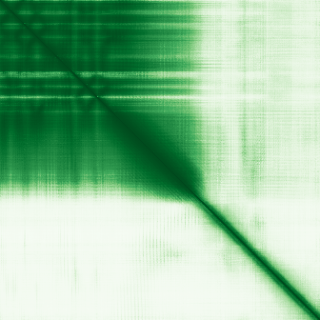
Mean pLDDT
74.8/ 100
Confident
336 residues
Confidence breakdown
- Very high(≥ 90)56%
- Confident(70–90)5%
- Low(50–70)7%
- Very low(< 50)32%
Open interactive 3D viewer
AlphaFold (Jumper et al., 2021) · CC BY 4.0
X-ray repair cross complementing 4
Annotations refreshed 2 months ago.
Diagnostic Grade (Green)
DDG2P
BIALLELIC, autosomal or pseudoautosomalFetal anomalies
BIALLELIC, autosomal or pseudoautosomalIntellectual disability
BIALLELIC, autosomal or pseudoautosomalIUGR and IGF abnormalities
BIALLELIC, autosomal or pseudoautosomalSevere microcephaly
BIALLELIC, autosomal or pseudoautosomalSkeletal dysplasia
BIALLELIC, autosomal or pseudoautosomalMitochondrial disorders
BIALLELIC, autosomal or pseudoautosomalMonogenic short stature
BIALLELIC, autosomal or pseudoautosomalmicrocephalic primordial dwarfism-insulin resistance syndrome
short stature, microcephaly, and endocrine dysfunction
neurodegenerative disease
isolated growth hormone deficiency type IA
HIV infectious disease
microcephalic primordial dwarfism
Fanconi anemia complementation group Q
Non-acquired isolated growth hormone deficiency
androgenetic alopecia
dyshidrosis
Score is the Open Targets composite evidence score (0-1). Higher = stronger gene-disease association.
DNA repair protein XRCC4
DNA non-homologous end joining (NHEJ) core factor, required for double-strand break repair and V(D)J recombination (PubMed:10757784, PubMed:10854421, PubMed:12517771, PubMed:16412978, PubMed:17124166, PubMed:17290226, PubMed:22228831, PubMed:25597996, PubMed:25742519, PubMed:25934149, PubMed:26100018, PubMed:26774286, PubMed:8548796). Acts as a scaffold protein that regulates recruitment of other proteins to DNA double-strand breaks (DSBs) (PubMed:15385968, PubMed:20852255, PubMed:26774286, PubMed:27437582). Associates with NHEJ1/XLF to form alternating helical filaments that bridge DNA and act like a bandage, holding together the broken DNA until it is repaired (PubMed:21768349, PubMed:21775435, PubMed:22287571, PubMed:26100018, PubMed:27437582, PubMed:28500754). The XRCC4-NHEJ1/XLF subcomplex binds to the DNA fragments of a DSB in a highly diffusive manner and robustly bridges two independent DNA molecules, holding the broken DNA fragments in close proximity to one other (PubMed:27437582). The mobility of the bridges ensures that the ends remain accessible for further processing by other repair factors (PubMed:27437582). Plays a key role in the NHEJ ligation step of the broken DNA during DSB repair via direct interaction with DNA ligase IV (LIG4): the LIG4-XRCC4 subcomplex reseals the DNA breaks after the gap filling is completed (PubMed:10757784, PubMed:10854421, PubMed:12517771, PubMed:17290226, PubMed:19837014, PubMed:9242410). XRCC4 stabilizes LIG4, regulates its subcellular localization and enhances LIG4's joining activity (PubMed:10757784, PubMed:10854421, PubMed:12517771, PubMed:17290226, PubMed:21982441, PubMed:22228831, PubMed:9242410). Binding of the LIG4-XRCC4 subcomplex to DNA ends is dependent on the assembly of the DNA-dependent protein kinase complex DNA-PK to these DNA ends (PubMed:10757784, PubMed:10854421). Promotes displacement of PNKP from processed strand break termini (PubMed:20852255, PubMed:28453785)
XRCC4 · Q13426
Mean pLDDT
74.8/ 100
Confident
336 residues
Confidence breakdown
AlphaFold (Jumper et al., 2021) · CC BY 4.0