
AlphaFold predicted structure
YRDC · Q86U90
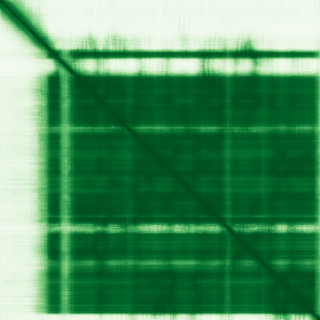
Mean pLDDT
82.6/ 100
Confident
279 residues
Confidence breakdown
- Very high(≥ 90)67%
- Confident(70–90)10%
- Low(50–70)5%
- Very low(< 50)17%
Open interactive 3D viewer
AlphaFold (Jumper et al., 2021) · CC BY 4.0
yrdC N6-threonylcarbamoyltransferase domain containing
Annotations refreshed 2 months ago.
Diagnostic Grade (Green)
DDG2P
BIALLELIC, autosomal or pseudoautosomalFetal anomalies
BIALLELIC, autosomal or pseudoautosomalProteinuric renal disease
BIALLELIC, autosomal or pseudoautosomalGalloway-Mowat syndrome 10
Galloway-Mowat syndrome
rheumatoid arthritis
systemic lupus erythematosus
skin cancer
neoplasm
non-small cell lung carcinoma
hepatocellular carcinoma
autoimmune disease
cancer
Score is the Open Targets composite evidence score (0-1). Higher = stronger gene-disease association.
Threonylcarbamoyl-AMP synthase
Cytoplasmic and mitochondrial threonylcarbamoyl-AMP synthase required for the formation of a threonylcarbamoyl group on adenosine at position 37 (t(6)A37) in tRNAs that read codons beginning with adenine (PubMed:29760464, PubMed:31481669, PubMed:34545459). Catalyzes the conversion of L-threonine, HCO(3)(-)/CO(2) and ATP to give threonylcarbamoyl-AMP (TC-AMP) as the acyladenylate intermediate, with the release of diphosphate (PubMed:29760464). Participates in t(6)A37 formation in cytoplasmic and mitochondrial tRNAs (PubMed:29760464). May regulate the activity of some transporters (By similarity)
YRDC · Q86U90
Mean pLDDT
82.6/ 100
Confident
279 residues
Confidence breakdown
AlphaFold (Jumper et al., 2021) · CC BY 4.0