
AlphaFold predicted structure
YY1 · P25490
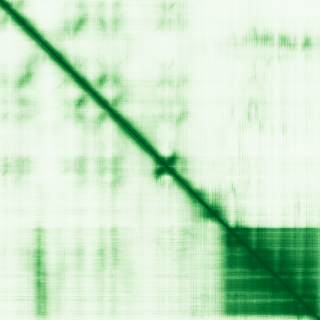
Mean pLDDT
50.6/ 100
Low
414 residues
Confidence breakdown
- Very high(≥ 90)13%
- Confident(70–90)16%
- Low(50–70)8%
- Very low(< 50)64%
Open interactive 3D viewer
AlphaFold (Jumper et al., 2021) · CC BY 4.0
YY1 transcription factor
Annotations refreshed 2 months ago.
Diagnostic Grade (Green)
Childhood onset dystonia, chorea or related movement disorder
MONOALLELIC, autosomal or pseudoautosomal, NOT imprintedDDG2P
MONOALLELIC, autosomal or pseudoautosomal, imprinted status unknownEarly onset dystonia
MONOALLELIC, autosomal or pseudoautosomal, NOT imprintedFetal anomalies
MONOALLELIC, autosomal or pseudoautosomal, imprinted status unknownIntellectual disability
MONOALLELIC, autosomal or pseudoautosomal, NOT imprintedSkeletal dysplasia
MONOALLELIC, autosomal or pseudoautosomal, NOT imprintedAdult onset dystonia, chorea or related movement disorder
MONOALLELIC, autosomal or pseudoautosomal, NOT imprintedAdult onset neurodegenerative disorder
MONOALLELIC, autosomal or pseudoautosomal, NOT imprintedGabriele de Vries syndrome
Intellectual disability
hereditary disease
intellectual disability, autosomal dominant 40
complex neurodevelopmental disorder
neurodevelopmental disorder
neurodegenerative disease
genetic developmental and epileptic encephalopathy
alcohol drinking
urolithiasis
Score is the Open Targets composite evidence score (0-1). Higher = stronger gene-disease association.
Transcriptional repressor protein YY1
Multifunctional transcription factor that exhibits positive and negative control on a large number of cellular and viral genes by binding to sites overlapping the transcription start site (PubMed:15329343, PubMed:17721549, PubMed:24326773, PubMed:25787250). Binds to the consensus sequence 5'-CCGCCATNTT-3'; some genes have been shown to contain a longer binding motif allowing enhanced binding; the initial CG dinucleotide can be methylated greatly reducing the binding affinity (PubMed:15329343, PubMed:17721549, PubMed:24326773, PubMed:25787250). The effect on transcription regulation is depending upon the context in which it binds and diverse mechanisms of action include direct activation or repression, indirect activation or repression via cofactor recruitment, or activation or repression by disruption of binding sites or conformational DNA changes (PubMed:15329343, PubMed:17721549, PubMed:24326773, PubMed:25787250). Its activity is regulated by transcription factors and cytoplasmic proteins that have been shown to abrogate or completely inhibit YY1-mediated activation or repression (PubMed:15329343, PubMed:17721549, PubMed:24326773, PubMed:25787250). For example, it acts as a repressor in absence of adenovirus E1A protein but as an activator in its presence (PubMed:1655281). Acts synergistically with the SMAD1 and SMAD4 in bone morphogenetic protein (BMP)-mediated cardiac-specific gene expression (PubMed:15329343). Binds to SMAD binding elements (SBEs) (5'-GTCT/AGAC-3') within BMP response element (BMPRE) of cardiac activating regions (PubMed:15329343). May play an important role in development and differentiation. Proposed to recruit the PRC2/EED-EZH2 complex to target genes that are transcriptional repressed (PubMed:11158321). Involved in DNA repair (PubMed:18026119, PubMed:28575647). In vitro, binds to DNA recombination intermediate structures (Holliday junctions). Plays a role in regulating enhancer activation (PubMed:28575647). Recruits the PR-DUB complex to specific gene-regulatory regions (PubMed:20805357)
Curated MONDO disease pages that list YY1 among their top associated genes.
YY1 · P25490
Mean pLDDT
50.6/ 100
Low
414 residues
Confidence breakdown
AlphaFold (Jumper et al., 2021) · CC BY 4.0