Skip to content
GenoLensGenoLens

ZMYND11

Chr 10p15.3

zinc finger MYND-type containing 11

Aliases:
BS69, BRAM1
MANE:
ENST00000381604.9

Annotations refreshed 9 hours ago.

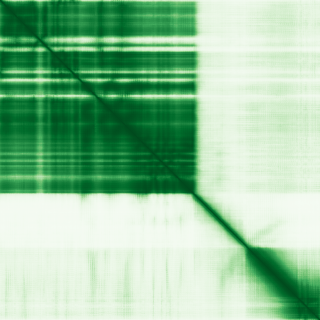
Predicted protein structure

Clinical relevance (Genomics England PanelApp)

Diagnostic Grade (Green)

  • DDG2P

    MONOALLELIC, autosomal or pseudoautosomal, imprinted status unknown
  • Intellectual disability

    MONOALLELIC, autosomal or pseudoautosomal, NOT imprinted
  • Fetal anomalies

    MONOALLELIC, autosomal or pseudoautosomal, NOT imprinted

Disease associations (Open Targets)

  • intellectual disability, autosomal dominant 30

    0.66
  • Intellectual disability

    0.59
  • hereditary disease

    0.53
  • smoking initiation

    0.38
  • syndromic complex neurodevelopmental disorder

    0.37
  • Global developmental delay

    0.34
  • schizophrenia

    0.12
  • neurodevelopmental disorder

    0.12
  • Motor delay

    0.12
  • Self-injurious behavior

    0.12

Score is the Open Targets composite evidence score (0-1). Higher = stronger gene-disease association.

Protein function (UniProt)

Zinc finger MYND domain-containing protein 11

Chromatin reader that specifically recognizes and binds histone H3.3 trimethylated at 'Lys-36' (H3.3K36me3) and regulates RNA polymerase II elongation. Does not bind other histone H3 subtypes (H3.1 or H3.2) (By similarity). Colocalizes with highly expressed genes and functions as a transcription corepressor by modulating RNA polymerase II at the elongation stage. Binds non-specifically to dsDNA (PubMed:24675531). Acts as a tumor-suppressor by repressing a transcriptional program essential for tumor cell growth

Data sources: HGNC (CC BY 4.0), AlphaFold (CC BY 4.0, Jumper et al. Nature 2021), Genomics England PanelApp (CC BY 4.0), ClinGen, Open Targets (CC0), UniProt.

Not for sole clinical decision-making. Always verify against primary sources.