
AlphaFold predicted structure
ZNF423 · Q2M1K9
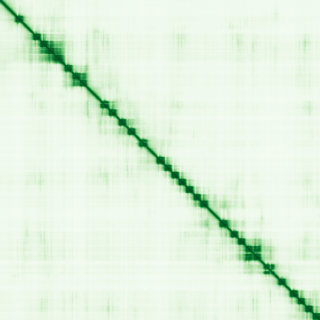
Mean pLDDT
60.6/ 100
Low
1,284 residues
Confidence breakdown
- Very high(≥ 90)0%
- Confident(70–90)46%
- Low(50–70)20%
- Very low(< 50)34%
Open interactive 3D viewer
AlphaFold (Jumper et al., 2021) · CC BY 4.0
zinc finger protein 423
Annotations refreshed 2 months ago.
Diagnostic Grade (Green)
Retinal disorders
BOTH monoallelic and biallelic, autosomal or pseudoautosomalCystic kidney disease
BOTH monoallelic and biallelic, autosomal or pseudoautosomalFetal anomalies
BOTH monoallelic and biallelic, autosomal or pseudoautosomalNeurological ciliopathies
BOTH monoallelic and biallelic, autosomal or pseudoautosomalOphthalmological ciliopathies
BOTH monoallelic and biallelic, autosomal or pseudoautosomalRare multisystem ciliopathy disorders
BOTH monoallelic and biallelic, autosomal or pseudoautosomalRenal ciliopathies
BOTH monoallelic and biallelic, autosomal or pseudoautosomalTubulointerstitial kidney disease
BOTH monoallelic and biallelic, autosomal or pseudoautosomal+7 more panels — install the extension to see the full list inline on any page.
Joubert syndrome with oculorenal defect
Joubert syndrome
Abnormality of the skeletal system
hypertensive disorder
Joubert syndrome 19
mathematical ability
smoking initiation
Increased blood pressure
essential hypertension
nephronophthisis
Score is the Open Targets composite evidence score (0-1). Higher = stronger gene-disease association.
Zinc finger protein 423
Transcription factor that can both act as an activator or a repressor depending on the context. Plays a central role in BMP signaling and olfactory neurogenesis. Associates with SMADs in response to BMP2 leading to activate transcription of BMP target genes. Acts as a transcriptional repressor via its interaction with EBF1, a transcription factor involved in terminal olfactory receptor neurons differentiation; this interaction preventing EBF1 to bind DNA and activate olfactory-specific genes. Involved in olfactory neurogenesis by participating in a developmental switch that regulates the transition from differentiation to maturation in olfactory receptor neurons. Controls proliferation and differentiation of neural precursors in cerebellar vermis formation
ZNF423 · Q2M1K9
Mean pLDDT
60.6/ 100
Low
1,284 residues
Confidence breakdown
AlphaFold (Jumper et al., 2021) · CC BY 4.0