Skip to content
GenoLensGenoLens

ZNFX1

Chr 20q13.13

zinc finger NFX1-type containing 1

Aliases:
KIAA1404, FLJ11277
MANE:
ENST00000396105.6

Annotations refreshed 1 month ago.

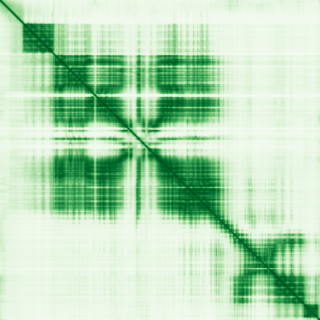
Predicted protein structure

Clinical relevance (Genomics England PanelApp)

Diagnostic Grade (Green)

  • Early onset or syndromic epilepsy

    BIALLELIC, autosomal or pseudoautosomal
  • Intellectual disability

    BIALLELIC, autosomal or pseudoautosomal
  • Primary immunodeficiency or monogenic inflammatory bowel disease

    BIALLELIC, autosomal or pseudoautosomal

Disease associations (Open Targets)

  • immunodeficiency 91 and hyperinflammation

    0.75
  • ovarian neoplasm

    0.29
  • hereditary disease

    0.19
  • undetermined early-onset epileptic encephalopathy

    0.12
  • atrial fibrillation

    0.11
  • hepatocellular carcinoma

    0.08
  • colorectal carcinoma

    0.08
  • myocardial infarction

    0.07
  • lung cancer

    0.07
  • lung carcinoma

    0.07

Score is the Open Targets composite evidence score (0-1). Higher = stronger gene-disease association.

Protein function (UniProt)

NFX1-type zinc finger-containing protein 1

RNA-activated non-canonical E3 ubiquitin ligase required for cell survival during interferon (IFN) responses. Functions as an ATP-dependent 5'-> 3' RNA translocase that selectively recognizes long single-stranded RNA (ssRNA) molecules (>100 nt) from viral or host origin during immune activation. Upon ssRNA binding, oligomerizes to assemble a split E3 active site in trans, involving the Z-RING domain that binds and activates E2-ubiquitin conjugates, such as UBE2D2, and the RZ catalytic domain that mediates ubiquitin transfer. Catalyzes hydroxyl ubiquitination of the 2'-OH of ssRNA ribose and auto-ubiquitination, generating mainly 'Lys-48'- and 'Lys-6'-linked polyubiquitin chains (PubMed:40876457). Forms ubiquitin-coated RNA condensates and stress granules, thereby regulating RNA metabolism, limiting excessive immune signaling, and preventing IFN-induced cell death (PubMed:33872655, PubMed:40876457). Also required for immunity against some bacteria, such as mycobacteria (PubMed:33876776). Inhibits NLRP3 inflammasome activation by sequestering NLRP3 in the cytoplasm and preventing its translocation to trans-Golgi network vesicles during the resting state. Upon inflammasome activation, is cleaved by CASP1, establishing a feed-forward loop that amplifies NLRP3 inflammasome activity (PubMed:39333773)

Data sources: HGNC (CC BY 4.0), AlphaFold (CC BY 4.0, Jumper et al. Nature 2021), Genomics England PanelApp (CC BY 4.0), ClinGen, Open Targets (CC0), UniProt.

Not for sole clinical decision-making. Always verify against primary sources.