
AlphaFold predicted structure
ANG · P03950
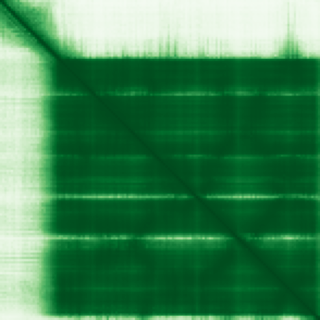
Mean pLDDT
89.8/ 100
Confident
147 residues
Confidence breakdown
- Very high(≥ 90)80%
- Confident(70–90)2%
- Low(50–70)17%
- Very low(< 50)1%
Open interactive 3D viewer
AlphaFold (Jumper et al., 2021) · CC BY 4.0
angiogenin
Annotations refreshed 2 months ago.
Diagnostic Grade (Green)
Adult onset neurodegenerative disorder
MONOALLELIC, autosomal or pseudoautosomal, imprinted status unknownAmyotrophic lateral sclerosis/motor neuron disease
MONOALLELIC, autosomal or pseudoautosomal, imprinted status unknownamyotrophic lateral sclerosis
type 1 diabetes mellitus
amyotrophic lateral sclerosis, dominant
frontotemporal dementia
hereditary disease
frontotemporal dementia with motor neuron disease
cancer
glioblastoma
hepatocellular carcinoma
glioma
Score is the Open Targets composite evidence score (0-1). Higher = stronger gene-disease association.
Angiogenin
Secreted ribonuclease that can either promote or restrict cell proliferation of target cells, depending on the context (PubMed:12051708, PubMed:1400510, PubMed:19332886, PubMed:20129916, PubMed:21855800, PubMed:23047679, PubMed:23843625, PubMed:2424496, PubMed:2459697, PubMed:2730651, PubMed:27518564, PubMed:28176817, PubMed:29100074, PubMed:29748193, PubMed:3122207, PubMed:32510170, PubMed:38718836, PubMed:8159680, PubMed:8570639, PubMed:8622921, PubMed:9578571). Endocytosed in target cells via its receptor PLXNB2 and translocates to the cytoplasm or nucleus (PubMed:29100074, PubMed:32510170). Under stress conditions, localizes to the cytoplasm and promotes the assembly of stress granules (SGs): specifically cleaves a subset of tRNAs within anticodon loops to produce tRNA-derived stress-induced fragments (tiRNAs), resulting in translation repression and inhibition of cell proliferation (PubMed:1400510, PubMed:19332886, PubMed:20129916, PubMed:21855800, PubMed:23047679, PubMed:27518564, PubMed:29100074, PubMed:29748193, PubMed:32510170, PubMed:38718836). tiRNas also prevent formation of apoptosome, thereby promoting cell survival (By similarity). Preferentially cleaves RNAs between a pyrimidine and an adenosine residue, suggesting that it cleaves the anticodon loop of tRNA(Ala) (32-UUAGCAU-38) after positions 33 and 36 (PubMed:3289612, PubMed:38718836). Cleaves a subset of tRNAs, including tRNA(Ala), tRNA(Glu), tRNA(Gly), tRNA(Lys), tRNA(Val), tRNA(His), tRNA(Asp) and tRNA(Sec) (PubMed:31582561). Under growth conditions and in differentiated cells, translocates to the nucleus and stimulates ribosomal RNA (rRNA) transcription, including that containing the initiation site sequences of 45S rRNA, thereby promoting cell growth and proliferation (PubMed:12051708, PubMed:15735021, PubMed:27518564, PubMed:29100074, PubMed:8127865). Angiogenin induces vascularization of normal and malignant tissues via its ability to promote rRNA transcription (PubMed:19354288, PubMed:4074709, PubMed:8448182). Involved in hematopoietic stem and progenitor cell (HSPC) growth and survival by promoting rRNA transcription in growth conditions and inhibiting translation in response to stress, respectively (PubMed:27518564). Mediates the crosstalk between myeloid and intestinal epithelial cells to protect the intestinal epithelial barrier integrity: secreted by myeloid cells and promotes intestinal epithelial cells proliferation and survival (PubMed:32510170). Also mediates osteoclast-endothelial cell crosstalk in growing bone: produced by osteoclasts and protects the neighboring vascular cells against senescence by promoting rRNA transcription (By similarity)
Curated MONDO disease pages that list ANG among their top associated genes.
ANG · P03950
Mean pLDDT
89.8/ 100
Confident
147 residues
Confidence breakdown
AlphaFold (Jumper et al., 2021) · CC BY 4.0