
AlphaFold predicted structure
NRAS · P01111
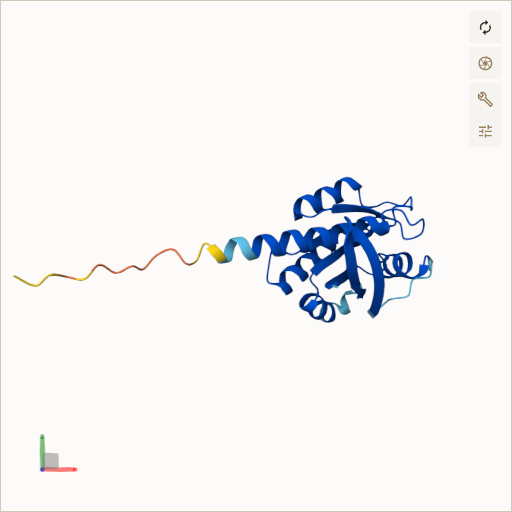
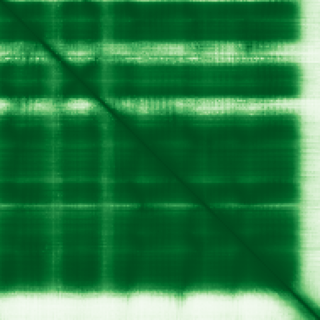
Mean pLDDT
92.1/ 100
Very high
189 residues
Confidence breakdown
- Very high(≥ 90)80%
- Confident(70–90)12%
- Low(50–70)4%
- Very low(< 50)4%
Open interactive 3D viewer
AlphaFold (Jumper et al., 2021) · CC BY 4.0
NRAS proto-oncogene, GTPase
Annotations refreshed 2 months ago.
Diagnostic Grade (Green)
Adult solid tumours cancer susceptibility
MONOALLELIC, autosomal or pseudoautosomal, imprinted status unknownChildhood solid tumours cancer susceptibility
MONOALLELIC, autosomal or pseudoautosomal, imprinted status unknownDDG2P
MONOALLELIC, autosomal or pseudoautosomal, imprinted status unknownFetal anomalies
MONOALLELIC, autosomal or pseudoautosomal, imprinted status unknownFetal hydrops
MONOALLELIC, autosomal or pseudoautosomal, NOT imprintedIntellectual disability
MONOALLELIC, autosomal or pseudoautosomal, NOT imprintedIUGR and IGF abnormalities
MONOALLELIC, autosomal or pseudoautosomal, NOT imprintedMonogenic short stature
MONOALLELIC, autosomal or pseudoautosomal, NOT imprinted+17 more panels — install the extension to see the full list inline on any page.
Noonan syndrome
Noonan syndrome 6
large congenital melanocytic nevus
nevus, epidermal
acute myeloid leukemia
autoimmune lymphoproliferative syndrome type 4
melanoma
cancer
juvenile myelomonocytic leukemia
plasma cell myeloma
Score is the Open Targets composite evidence score (0-1). Higher = stronger gene-disease association.
GTPase NRas
Signal transducer in the Ras-MAPK signaling pathway that regulates cell proliferation and survival (PubMed:30712867). Ras proteins bind GDP/GTP and possess intrinsic GTPase activity (PubMed:30712867). Recognized by LZTR1 that mediates its ubiquitination by a BCR (BTB-CUL3-RBX1) E3 ubiquitin-protein ligase complex (PubMed:40934300)
Curated MONDO disease pages that list NRAS among their top associated genes.
NRAS · P01111
Mean pLDDT
92.1/ 100
Very high
189 residues
Confidence breakdown
AlphaFold (Jumper et al., 2021) · CC BY 4.0