
AlphaFold predicted structure
RB1 · P06400
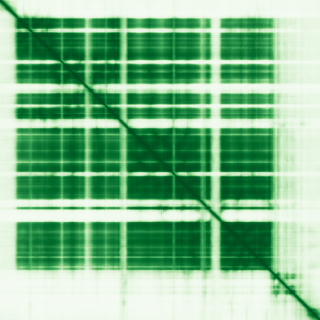
Mean pLDDT
76.1/ 100
Confident
928 residues
Confidence breakdown
- Very high(≥ 90)51%
- Confident(70–90)14%
- Low(50–70)14%
- Very low(< 50)22%
Open interactive 3D viewer
AlphaFold (Jumper et al., 2021) · CC BY 4.0
RB transcriptional corepressor 1
Annotations refreshed 2 months ago.
Diagnostic Grade (Green)
Adult solid tumours cancer susceptibility
MONOALLELIC, autosomal or pseudoautosomal, imprinted status unknownAdult solid tumours for rare disease
MONOALLELIC, autosomal or pseudoautosomal, imprinted status unknownChildhood solid tumours
MONOALLELIC, autosomal or pseudoautosomal, imprinted status unknownChildhood solid tumours cancer susceptibility
MONOALLELIC, autosomal or pseudoautosomal, imprinted status unknownFamilial rhabdomyosarcoma
MONOALLELIC, autosomal or pseudoautosomal, imprinted status unknownRetinoblastoma
MONOALLELIC, autosomal or pseudoautosomal, imprinted status unknownSarcoma of possible germline origin
MONOALLELIC, autosomal or pseudoautosomal, imprinted status unknownSarcoma cancer susceptibility
MONOALLELIC, autosomal or pseudoautosomal, imprinted status unknown+3 more panels — install the extension to see the full list inline on any page.
retinoblastoma
hereditary retinoblastoma
urinary bladder cancer
urinary bladder carcinoma
small cell lung carcinoma
non-hereditary retinoblastoma
hepatocellular carcinoma
lung adenocarcinoma
trilateral retinoblastoma
osteosarcoma
Score is the Open Targets composite evidence score (0-1). Higher = stronger gene-disease association.
Retinoblastoma-associated protein
Tumor suppressor that is a key regulator of the G1/S transition of the cell cycle (PubMed:10499802). The hypophosphorylated form binds transcription regulators of the E2F family, preventing transcription of E2F-responsive genes (PubMed:10499802). Both physically blocks E2Fs transactivating domain and recruits chromatin-modifying enzymes that actively repress transcription (PubMed:10499802). Cyclin and CDK-dependent phosphorylation of RB1 induces its dissociation from E2Fs, thereby activating transcription of E2F responsive genes and triggering entry into S phase (PubMed:10499802). RB1 also promotes the G0-G1 transition upon phosphorylation and activation by CDK3/cyclin-C (PubMed:15084261). Directly involved in heterochromatin formation by maintaining overall chromatin structure and, in particular, that of constitutive heterochromatin by stabilizing histone methylation. Recruits and targets histone methyltransferases SUV39H1, KMT5B and KMT5C, leading to epigenetic transcriptional repression. Controls histone H4 'Lys-20' trimethylation. Inhibits the intrinsic kinase activity of TAF1. Mediates transcriptional repression by SMARCA4/BRG1 by recruiting a histone deacetylase (HDAC) complex to the c-FOS promoter. In resting neurons, transcription of the c-FOS promoter is inhibited by BRG1-dependent recruitment of a phospho-RB1-HDAC1 repressor complex. Upon calcium influx, RB1 is dephosphorylated by calcineurin, which leads to release of the repressor complex (By similarity)
Curated MONDO disease pages that list RB1 among their top associated genes.
RB1 · P06400
Mean pLDDT
76.1/ 100
Confident
928 residues
Confidence breakdown
AlphaFold (Jumper et al., 2021) · CC BY 4.0